
Finance & Business
Dangote Refinery Fuel Price Update: Latest Petrol Rates and Market Shifts
Under the new commercial terms, the gantry price—which applies to direct truck loading at the Lekki refinery—was adjusted to ₦1,265 per litre.This represents a ₦65 increase over the previous benchmark rate of ₦1,200 per litre.

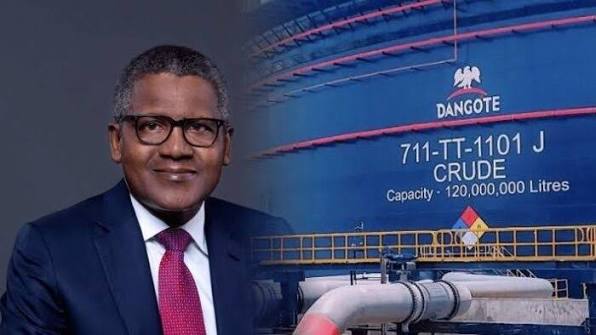
EDITORIAL by Maxwell Nnawuihe | Published: September 1, 2026
The landscape of fuel pricing in Nigeria is shifting rapidly, with the Dangote Petroleum Refinery playing a central role in shaping wholesale and retail rates across the country.As the multi-billion-dollar facility scales its operations, stakeholders from everyday motorists to commercial transport operators and industrial petroleum marketers are closely tracking every price adjustment coming out of the mega-refinery.
Understanding how these pricing decisions impact filling stations, supply chains, and household budgets is crucial for navigating the evolving economic environment.
Key Highlights of the Latest Fuel Price Adjustments
To help consumers and business owners understand where the petroleum market stands, the primary rates across key supply channels are summarized below:
| Supply Channel / Entity | Price Rate (Per Litre / Unit) | Recent Trend & Context |
| Dangote Refinery Gantry Price | ₦1,265 / litre | Adjusted upward by ₦65/litre from ₦1,200 |
| Dangote Coastal Delivery Price | ₦1,669,545 / metric tonne | Increased from ₦1,582,380 / metric tonne |
| NNPCL Retail Filling Stations | ₦1,270 / litre | Adjusted at major retail outlets in key metro areas |
| Independent Marketer Depots | ₦1,200 – ₦1,217 / litre | Fluctuating based on logistics and regional supply |
Inside the Latest Dangote Refinery Price Revisions
The Dangote Petroleum Refinery recently issued a commercial circular notifying petroleum marketers of a revised pricing structure for Premium Motor Spirit (PMS).Under the new commercial terms, the gantry price—which applies to direct truck loading at the Lekki refinery—was adjusted to ₦1,265 per litre.This represents a ₦65 increase over the previous benchmark rate of ₦1,200 per litre.
Simultaneously, coastal deliveries intended for bulk marine transport were re-priced from ₦1,582,380 to ₦1,669,545 per metric tonne.In its communication to off-takers, the refinery’s commercial division advised distribution partners to return existing Automated Truck Loading (ATC) tickets for repricing to issue new volume contracts.
  [Dangote Refinery Gantry] ──> ₦1,265 / Litre (Base Wholesale)
               │
               ▼
  [Depot & Logistics Costs] ──> ₦15 – ₦35 / Litre Transit Addition
               │
               ▼
  [Retail Pump Price]      ──> ₦1,280 – ₦1,310 / Litre (Pump Range)
The adjustment reflects several dynamic variables, including shifting crude oil feedstocks, foreign exchange dynamics, maintenance considerations, and domestic supply commitments.
How the Wholesale Increase Affects Retail Pump Prices
When wholesale gantry rates move at the refinery level, the ripple effect reaches retail pump prices at neighborhood filling stations. Petroleum marketers purchasing fuel directly from the Lekki facility must account for additional landing and operational costs before setting retail rates.
ALSO READ:
- Upstream Pivot: Dangote Crude Oil Production Redefines African Energy Sovereignty
- Dangote Refinery Boosts Domestic Production & Transforming Nigeria Fuel Market
- Strait of Hormuz Open: How Economic Fury Broke the Persian Chokepoint
- The Strait of Hormuz Closed Again: Why The Chockepoint Returns
Key variables determining the final price at the pump include:
- Transportation and Freight Charges: Tanker trucks transporting fuel from the gantry in Lekki, Lagos, to inland regions (such as the North-Central, North-West, or South-East zones) incur significant haulage costs.
- Depot Handling Fees: Independent depot operators factor in storage, throughput, and administrative overheads when offloading coastal shipments.
- Retail Outlet Margins: Station owners must maintain operating margins to cover staff wages, generator power, and facility upkeep.
Consequently, while the gantry rate stands at ₦1,265 per litre, everyday consumers can expect retail pump prices to range between ₦1,280 and ₦1,310 per litre depending on geographic location and transport distances from the refinery hub.
Comparing Local Refining and Imported Petroleum
One of the central discussions surrounding Nigeria’s energy sector is how domestic refining compares with imported refined products. Historically, the Nigerian market relied almost entirely on imported PMS, leaving pump prices exposed to international freight volatility, vessel charter fees, and port demurrage charges.
The operational ramp-up of the Dangote Refinery provides several structural advantages:
- Elimination of Foreign Shipping Friction: Processing crude locally removes long-distance ocean freight costs and reduces delays associated with international marine transport.
- Logistical Efficiency: Direct gantry loading allows marketers to dispatch tanker trucks rapidly, easing distribution bottlenecks across major highways.
- Foreign Exchange Stabilization: Purchasing refined products domestically reduces pressure on foreign currency reserves, easing broader macroeconomic tensions over time.
However, because domestic refineries purchase crude oil aligned with global market benchmarks, local pump prices remain connected to international crude movements and refining margins.
Impact on Households, Businesses, and Transportation
Fuel prices directly influence the broader economy, touching everything from daily transit fares to the operating costs of small enterprises.
┌─────────────────────────────────────────────────────────────┐
│                  Economic Effects of Fuel Rates             │
├──────────────────────────────┬──────────────────────────────┤
│ Household Budgets            │ Commercial Operations        │
├──────────────────────────────┼──────────────────────────────┤
│ • Higher daily commute costs │ • Increased logistics overhead
│ • Increased food freight fees│ • Generator fuel expense     │
│ • Adjusted family spending   │ • Service price adjustments  │
└──────────────────────────────┴──────────────────────────────┘
For small business owners who rely on petrol generators for power continuity, price shifts require careful budgeting to manage overhead. Transport unions and logistics providers similarly adjust fare structures to balance fuel expenses with passenger affordability.
At the same time, a stabilized domestic supply chain minimizes the threat of unexpected fuel scarcity, giving businesses a predictable foundation for planning their operations.
Future Outlook for the Nigerian Energy Market
Looking ahead, industry analysts anticipate that market competition between domestic refineries, state-owned retail networks like NNPCL, and independent importers will gradually foster greater market equilibrium. As local refining capacity expands and direct distribution networks mature, supply reliability is expected to improve significantly across all six geopolitical zones.
Consumers and business managers should monitor official communications from the Dangote Group, regulatory updates from the Nigerian Midstream and Downstream Petroleum Regulatory Authority (NMDPRA), and weekly depot price trackers to make informed financial decisions.
Intellectual Property & Content Protection Notice
© 2026 TrackingTimes.co All rights reserved.
This publication, including its text, structure, analysis, headlines, and original reporting, is protected under applicable international copyright laws.
No portion of this article may be copied, reproduced, modified, republished, distributed, scraped, translated, or stored in any retrieval system without the express written consent of TrackingTimes.co.
Content scraping, AI training usage, unauthorized reposting, or monetized reproduction is strictly prohibited and may attract civil and criminal penalties.
For syndication or licensing requests, contact: trackingtimes@gmail.com