
Global Affairs
Manchester Airports Group Cyber Attack: 8.7 Million Customers’ Data Accessed
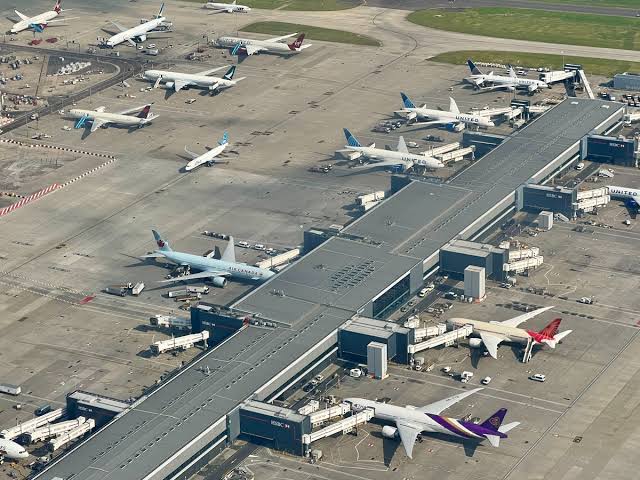
MAG, which operates Manchester Airport, London Stansted Airport and East Midlands Airport, said an unauthorised third party obtained a quantity of customer data connected to services at the three airports

by Maxwell Nnawuihe | Published: August 29, 2026
Manchester Airports Group Cyber Attack Exposes Data of 8.7 Million Customers
A major cyber attack targeting Manchester Airports Group (MAG) has put the personal information of approximately 8.7 million customers under scrutiny, highlighting once again the growing cybersecurity risks facing major travel and transport organisations.
MAG, which operates Manchester Airport, London Stansted Airport and East Midlands Airport, said an unauthorised third party obtained a quantity of customer data connected to services at the three airports.
The company has stressed, however, that the incident did not compromise passenger safety or aviation security and did not disrupt airport operations. It also said that neither MAG nor the affected system held customers’ bank or payment details.
The incident therefore appears to be primarily a customer-data security breach, rather than an attack that brought airport operations to a standstill.
That distinction matters.
What Happened in the Manchester Airport Cyber Attack?
Manchester Airports Group confirmed that it had suffered a cybersecurity incident involving an unauthorised third party.
The affected information related to several customer services, including:
- Airport car-park bookings
- Lounge bookings
- Fast Track bookings
- In-airport Wi-Fi registrations
The information accessed included email addresses, phone numbers, vehicle registration numbers and postcodes. MAG said that bank and payment details were not held in the affected system.
Reports indicate that the vast majority of affected customers had only their email addresses exposed, particularly information collected when people registered for airport Wi-Fi.
That does not make the incident insignificant.
Personal information can still be valuable to criminals because seemingly ordinary details can sometimes be combined to create convincing fraudulent messages.
How Many Customers Were Affected?
The figure attracting the most attention is approximately 8.7 million customers.
That number covers people connected with the affected services and airports rather than suggesting that every person had the same information exposed.
The exact information associated with individual customers can differ.
Some people may have had an email address accessed, while other records may also have included information such as a phone number, postcode or vehicle registration. (The Record from Recorded Future)
This is an important point when discussing data breaches.
A large headline figure does not necessarily mean every affected person had their most sensitive information stolen.
Which Airports Were Affected?
The incident involved three airports operated by Manchester Airports Group:
Manchester Airport
Manchester Airport is one of the UK’s major international aviation hubs and handles millions of passengers each year.
London Stansted Airport
Stansted is another major UK airport operated by MAG and serves passengers travelling to destinations across Europe and beyond.
East Midlands Airport
East Midlands Airport is also part of the MAG group and serves passengers and businesses in the region.
MAG said the cybersecurity incident affected customer information associated with services at all three airports.
Was Airport Security Compromised?
According to Manchester Airports Group, no.
This is one of the most important facts surrounding the incident.
MAG has stated that:
- Passenger safety was not compromised.
- Aviation security was not compromised.
- Airport operations remained unaffected.
- Customer parking services continued operating.
- Bank and payment details were not accessed from the affected system.
In other words, travellers should not automatically interpret the cyber attack as meaning that flights or airport security systems were taken over. The available information points instead to a breach involving customer information and associated systems.
Why Stolen Email Addresses Can Still Be Dangerous
An email address may appear relatively harmless compared with a bank account number. But cybersecurity does not work that way.
An email address can become useful to criminals when combined with information such as:
- A person’s name
- A recent airport booking
- A vehicle registration
- A postcode
- Travel-related information
This creates the possibility of highly convincing phishing and social-engineering attempts.
For example, a traveller might receive a message claiming to be from an airport and referring to a recent parking booking.
The message could appear legitimate simply because it contains information connected to a real journey.
That is why data breaches can continue creating risks long after the original technical incident has been contained.
The Biggest Risk May Come After the Cyber Attack
When people hear the phrase “cyber attack,” they often imagine hackers immediately stealing money.
That is not always the biggest danger. In customer-data incidents, one major concern is what happens after information has been obtained. Criminals may attempt to use exposed information to make fraudulent communications appear more believable.
For travellers, that means an unexpected email, text message or phone call should be treated carefully—particularly if it asks for:
- Payment information
- Passwords
- Security codes
- Personal identification
- Urgent account changes
MAG has specifically warned customers to be cautious about unexpected communications and said it would not unexpectedly ask customers for payment or banking information. (The Guardian)
What Should Affected Customers Do?
Customers who believe they may have been affected should remain alert rather than panic.
A sensible approach is to:
Be cautious with unexpected messages
Do not assume that a message is genuine simply because it contains information about an airport booking.
Avoid clicking suspicious links
If a message creates urgency and asks you to click a link, pause and verify the request through an official channel.
Be careful with payment requests
Do not provide banking or payment information in response to an unexpected message.
Check the sender carefully
Look beyond the display name. Fraudulent messages can be designed to look as though they came from a familiar organisation.
Keep an eye on your accounts
Regularly review important accounts for unusual activity.
Verify before acting
If something feels unusual, independently confirm it rather than responding immediately. The goal is not to become frightened of every email. It is to become more deliberate about unexpected digital communication.
ALSO READ:
- WhatsApp Business Charges Explained: Is WhatsApp Business Free for Businesses?
- ₦512.1 Billion in 6 Months: What Nigeria’s State Spending on Government Houses, Offices and Travel Means for Citizens\
- The Billion-Dollar Filter: 20 Banks Cross the CBN’s 2026 Recapitalization Finish Line
- The $3.5 Trillion Handshake: Nigeria Launches AfCFTA Digital Payments Roadmap
MAG Says It Contained the Incident
Manchester Airports Group said it immediately contained the risk after discovering the incident and began working with specialist advisers.
The company also said it had informed relevant authorities and was taking steps to protect customers and its systems.
The response highlights an important principle in cybersecurity:
Speed matters.
The faster an organisation identifies suspicious activity, limits access and investigates what happened, the better positioned it may be to reduce further exposure.
However, containing an incident does not erase the consequences of information that may already have been accessed.
That is why communication with affected customers remains important.
Online Booking Services Were Temporarily Restricted
As a precaution, MAG temporarily suspended access to its online Manage My Booking service.
The airport group said upcoming bookings remained valid and were not affected by the incident.
For urgent changes involving bookings within 72 hours, customers were directed to contact customer services.
This illustrates another consequence of cybersecurity incidents.
Even when airport operations continue normally, organisations may temporarily restrict digital services while they investigate and secure their systems.
Why Airport Cybersecurity Matters
Airports are increasingly digital environments.
Travellers use online systems to:
- Book parking
- Reserve lounges
- Purchase Fast Track services
- Access Wi-Fi
- Manage travel arrangements
- Receive communications
That convenience also creates a larger digital footprint.
The more systems connected to customers and business operations, the more important cybersecurity becomes.
A modern airport therefore has to protect more than aircraft and runways.
It must also protect information.
The Bigger Lesson for Businesses
The Manchester Airports Group incident contains a lesson for businesses of every size.
A company does not have to be a global airport operator to become a target.
Small businesses often collect:
- Customer names
- Email addresses
- Phone numbers
- Delivery addresses
- Booking information
- Payment-related information
That data deserves protection.
For small businesses, cybersecurity does not necessarily begin with an expensive technology department.
It can begin with basic habits:
- Use strong, unique passwords.
- Enable multi-factor authentication where available.
- Keep software updated.
- Limit access to customer information.
- Train staff to recognise suspicious messages.
- Back up important business information.
- Collect only information that the business actually needs.
- Have a clear plan for responding to a suspected breach.
Good cybersecurity is not only about preventing attacks.
It is also about reducing the damage when something goes wrong.
A Broader Warning About Digital Trust
The airport cyber attack also raises a wider issue: digital trust.
Customers provide personal information because they expect businesses to handle it responsibly.
When people sign up for airport Wi-Fi or provide details while making a booking, they are not necessarily thinking about cybersecurity.
They are thinking about their journey.
That places a responsibility on organisations to treat customer information as an important asset.
For businesses, protecting customer data is therefore not merely a technical responsibility. It is a trust responsibility.
What This Incident Does Not Mean
It is equally important to avoid exaggerating the story.
The available information does not establish that:
- Airport flights were brought down.
- Aviation security was breached.
- Customer bank accounts were accessed.
- Payment-card information was stolen from the affected system.
- All 8.7 million customers had identical information exposed.
MAG has explicitly said airport operations and passenger safety remained unaffected.
Responsible reporting should distinguish between what is confirmed and what remains under investigation.
RELATED ARTICLES:
Final Thoughts: Airport Cyber Attacks Are About More Than Technology
The Manchester Airports Group cyber attack is a reminder that cybersecurity has become part of everyday life.
A person may never think of their airport Wi-Fi registration, parking booking or postcode as particularly valuable information.
But when large databases are compromised, ordinary pieces of information can become part of a much bigger security picture.
The good news is that the available information indicates that passenger safety, aviation security and airport operations were not compromised.
The concern is the exposure of customer information and what criminals might attempt to do with it afterward.
For travellers, the best response is awareness—not panic.
For businesses, the lesson is even clearer:
Protect customer information before an incident happens, respond quickly when something goes wrong, and communicate honestly with the people affected.
In an increasingly connected world, cybersecurity is no longer simply an IT issue.
It is a fundamental part of public trust, business responsibility and digital safety.
Key Facts at a Glance
| Issue | What is currently known |
|---|---|
| Organisation affected | Manchester Airports Group |
| Airports involved | Manchester, London Stansted and East Midlands |
| Customers potentially affected | About 8.7 million |
| Data accessed | Email addresses, phone numbers, vehicle registrations and postcodes |
| Main services involved | Wi-Fi registrations, car parks, lounges and Fast Track bookings |
| Bank/payment information | MAG says it was not held in the affected system |
| Passenger safety | Not compromised, according to MAG |
| Aviation security | Not compromised, according to MAG |
| Airport operations | Remained unaffected |
| Investigation | MAG is working with specialist advisers and relevant authorities |
Source note: This article is based on Manchester Airports Group’s public statement and current reporting available as of August 29, 2026. Details may change as the investigation continues.
Intellectual Property & Content Protection Notice
© 2026 TrackingTimes.co All rights reserved.
This publication, including its text, structure, analysis, headlines, and original reporting, is protected under applicable international copyright laws.
No portion of this article may be copied, reproduced, modified, republished, distributed, scraped, translated, or stored in any retrieval system without the express written consent of TrackingTimes.co.
Content scraping, AI training usage, unauthorized reposting, or monetized reproduction is strictly prohibited and may attract civil and criminal penalties.
For syndication or licensing requests, contact: trackingtimes@gmail.com