
Biafra
Can Awareness Change Government Policy? Lessons for Biafra and Nnamdi Kanu
One of the key themes explored in the analysis is that no major movement succeeded through awareness alone.

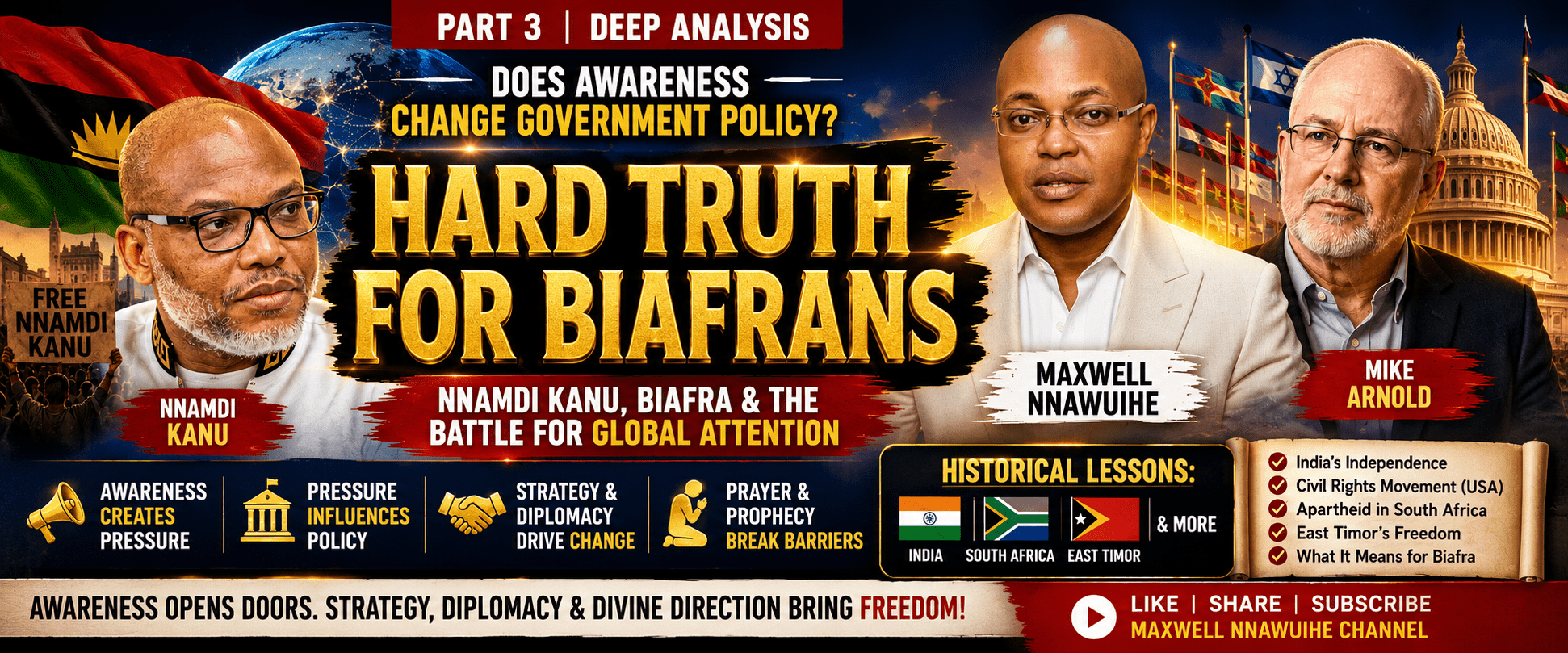
One question continues to generate debate among supporters of political, social and humanitarian causes around the world: Can awareness really change government policy?
The question has become even more relevant in discussions surrounding Mazi Nnamdi Kanu, the Biafra self-determination movement, and growing international conversations about justice, human rights and political advocacy.
In Part 3 of his ongoing deep-dive series, Maxwell Nnawuihe examines a central argument raised by commentator Mike Arnold: awareness is often the first step toward political change, but awareness alone may not be enough.
Why Awareness Matters
History shows that governments rarely respond to issues that remain invisible to the public. Before major policy shifts occur, people must first understand the issue, discuss it, and recognize why it matters.
From India’s independence movement to the American Civil Rights Movement and the struggle against apartheid in South Africa, awareness played a significant role in bringing global attention to important causes.
However, awareness was only one part of a much larger process.
Successful movements often combined:
- Public education
- Media exposure
- Diplomatic engagement
- Legal action
- Community organization
- Strategic leadership
According to Maxwell Nnawuihe, awareness opens doors, but strategy often determines what happens after those doors open.
Lessons from History
One of the key themes explored in the analysis is that no major movement succeeded through awareness alone.
India’s independence struggle involved decades of political organization, diplomacy and public engagement.
The American Civil Rights Movement combined public awareness with court victories, faith leadership and legislative action.
In South Africa, growing international awareness eventually led to diplomatic and economic pressure that helped accelerate political change.
These examples suggest that awareness can create momentum, but lasting change often requires multiple forces working together.
A Biblical Perspective
The analysis also draws lessons from the story of Nehemiah.
When Nehemiah sought to rebuild Jerusalem, he did not rely solely on prayer. He prayed, planned, negotiated, organized and prepared for opposition.
The lesson is simple: purpose often requires both faith and action.
For many viewers, this biblical example provides a framework for understanding how awareness, strategy and persistence can work together.
Is Awareness Enough?
While Mike Arnold’s argument highlights the importance of visibility and education, Maxwell Nnawuihe also points out areas where the argument may be incomplete.
Political decisions are influenced by many factors, including:
- National interests
- Economic relationships
- Security considerations
- Diplomatic priorities
- International alliances
As a result, awareness should not be viewed as a magic solution. It is important, but it is rarely the only factor that shapes government decisions.
The Bigger Question
How do these historical lessons apply to Nnamdi Kanu, the Biafra movement and ongoing international discussions surrounding self-determination?
Has awareness already increased?
What impact has international attention had so far?
What lessons can be learned from other movements around the world?
These are some of the important questions explored in Maxwell Nnawuihe’s latest analysis.
Watch the Full Breakdown
This article only highlights a small portion of the discussion.
For a deeper examination of Mike Arnold’s arguments, historical comparisons involving India, South Africa and East Timor, biblical lessons from Nehemiah, and the broader conversation surrounding Nnamdi Kanu and Biafra, watch the full Part 3 analysis on the Maxwell Nnawuihe YouTube Channel titled:
The full video provides elaborate historical and biblical context, detailed examples and perspectives that cannot be fully covered in this article.
Watch, reflect and join the conversation.
ALSO READ:
Intellectual Property & Content Protection Notice
© 2026 TrackingTimes.co All rights reserved.
This publication, including its text, structure, analysis, headlines, and original reporting, is protected under applicable international copyright laws.
No portion of this article may be copied, reproduced, modified, republished, distributed, scraped, translated, or stored in any retrieval system without the express written consent of TrackingTimes.co.
Content scraping, AI training usage, unauthorized reposting, or monetized reproduction is strictly prohibited and may attract civil and criminal penalties.
For syndication or licensing requests, contact: trackingtimes@gmail.com