
News & Politics
INEC Declares Adeleke Winner of 2026 Osun Governorship Election
The election was held on August 15, 2026, with INEC announcing Adeleke as the winner on August 16 by the INNEC’s State Returning Officer, Joshua Ogunwole at the State Collation Centre in Osogbo.

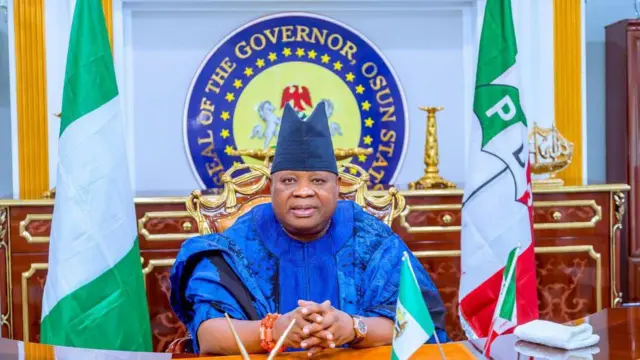
The Independent National Electoral Commission (INEC) has declared Osun State Governor Ademola Adeleke of the Accord Party winner of the 2026 Osun State governorship election.
The seating Governor, Ademola Adeleke, secured 511,067 votes, defeating the All Progressives Congress (APC) candidate, Bola Oyebamiji, who polled a total of 444,815 votes. The margin was 66,252 votes.
The election was held on August 15, 2026, with INEC announcing Adeleke as the winner on August 16 by the INNEC’s State Returning Officer, Joshua Ogunwole at the State Collation Centre in Osogbo.
Adeleke Wins 19 LGAs
According to the announced results, Adeleke won 19 of Osun State’s 30 local government areas, while Oyebamiji won 11.
Adeleke recorded victories in areas including Ede North, Osogbo, Ede South, Iwo, Ife East, Ife Central, Ifelodun, Oriade, Egbedore, Odo Otin, Ilesa West, Ila, Ayedaade, Ife North, Orolu, Boluwaduro, Ayedire, Ifedayo and Ejigbo.
Some of Adeleke’s strongest margins came from Ede North, Ede South and Osogbo, contributing significantly to his statewide lead.
APC Wins 11 LGAs
Oyebamiji and the APC also recorded significant victories, winning 11 local government areas.
Among them were Ilesa East, Boripe, Irepodun, Obokun, Atakumosa West, Irewole, Atakumosa East, Isokan, Olaoluwa, Ife South and Olorunda.
The results show that the election was competitive across the state, with both major contenders maintaining strong areas of support.
ALSO READ:
What Adeleke’s Victory Means for Osun Politics
The result gives Adeleke another mandate at a time when Nigerian politics is already looking ahead to the 2027 general elections.
Beyond the headline victory, the Osun election provides another useful picture of voter preferences, party competition and the importance of local government-level support in Nigerian elections.
Adeleke’s performance also demonstrates the significance of maintaining broad support across multiple LGAs rather than relying only on traditional political strongholds.
For the APC, the result provides an opportunity to examine its campaign strategy, voter mobilisation, regional support and performance across the 11 LGAs it won.
A Note on the Original Report
The supplied report contained a date error, referring to the declaration as August 16, 2016. The correct year is 2026. INEC’s election timetable and contemporary reports confirm that the Osun governorship election took place in August 2026.
There was also a spelling error in the original text referring to INEC as “INNEC.” The correct name is the Independent National Electoral Commission (INEC).
The Osun governorship election is more than a set of numbers. It raises important questions about voter behaviour, party strength, political strategy and what the result could mean for the wider Nigerian political landscape.