News & Politics
₦512.1 Billion in 6 Months: What Nigeria’s State Spending on Government Houses, Offices and Travel Means for Citizens
Comparable records showed approximately ₦465.07 billion under Government House, Governor’s Office and related executive administration, alongside ₦92.73 billion for travel and transport. That produced a combined figure of about ₦557.80 billion.

EDITORIAL | Published by Maxwell Nnawuihe: August 27, 2026.
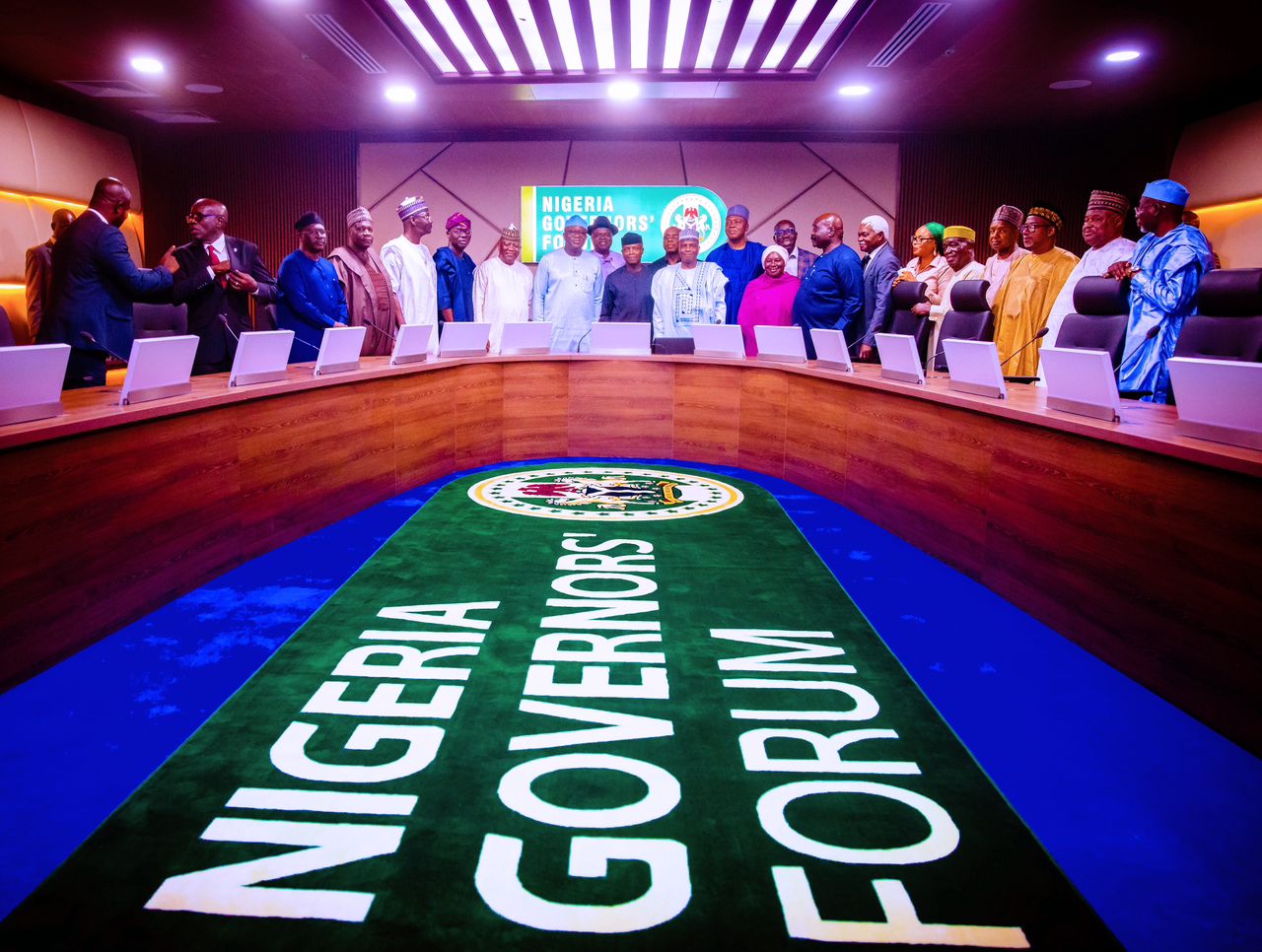
Thirty-three Nigerian state governments spent at least ₦512.10 billion on Government Houses, Governors’ Offices, travel and transport during the first six months of 2026, according to an analysis of available state budget implementation reports.
The figure is large enough to attract attention, but the number needs context.
This expenditure does not automatically mean that governors personally received ₦512.1 billion. The spending covers government operations, including executive administration, Government House-related expenses and official travel. In other words, these are public administrative costs rather than personal income.
Still, the size of the expenditure raises an important question:
How much does it cost to run state governments, and are citizens receiving enough public value in return?
That question matters even more as Nigerian households and businesses continue adjusting to higher living and operating costs.
What the ₦512.1 Billion Covered
The available analysis puts the spending into two broad categories:
- ₦420.01 billion for Government Houses, Governors’ Offices and related executive administration.
- ₦92.09 billion for travel and transport.
Together, these categories amounted to approximately ₦512.10 billion during the first half of 2026.
The comparison with the first half of 2025 is also revealing.
Comparable records showed approximately ₦465.07 billion under Government House, Governor’s Office and related executive administration, alongside ₦92.73 billion for travel and transport. That produced a combined figure of about ₦557.80 billion.
That means the comparable first-half figure for 2026 was about ₦45.70 billion lower, representing an estimated 8.19 percent decline.
So while ₦512.1 billion is substantial, the available figures do not show an overall increase from the comparable 2025 period.
Government House Spending Fell, But Remains Significant
The largest component of the 2026 expenditure was Government House and Governor’s Office spending.
Available figures show that this category declined from ₦465.07 billion in the first half of 2025 to ₦420.01 billion in the first half of 2026.
That represents a reduction of approximately ₦45.05 billion, or 9.69 percent.
This is an important distinction.
A headline about hundreds of billions of naira spent on executive administration can create the impression that spending has simply exploded. The data suggests a more complicated picture: overall comparable spending declined, even though the absolute amount remains very large.
For citizens, the next question should therefore be less about the headline number alone and more about value for money.
Official Travel Spending Barely Changed
Travel and transport expenditure showed much less movement.
The available figures indicate that states spent ₦92.09 billion on travel and transport in the first six months of 2026, compared with approximately ₦92.73 billion during the same period in 2025.
That is a decline of only about ₦643.66 million, or 0.69 percent.
In practical terms, official travel spending was broadly stable.
This raises legitimate questions about how governments plan official trips, conferences, delegations and other travel-related activities.
Travel can be an essential part of governance. Governors and officials may need to meet investors, inspect projects, attend national meetings, respond to emergencies or represent their states.
The issue is therefore not whether government officials should travel.
The better question is:
Are official trips producing measurable public value?
Which States Recorded Some of the Highest Spending?
The available data shows substantial differences among states.
For Government House and Governor’s Office expenditure, Kogi recorded one of the largest identifiable figures, accounting for more than 15 percent of the identifiable spending captured in that category.
Kogi’s identifiable Government House and Governor’s Office spending increased from approximately ₦51.99 billion in the first half of 2025 to ₦65.34 billion in 2026, an increase of about 25.66 percent.
Other notable changes included:
- Bayelsa: approximately ₦22.99 billion in 2026, up from ₦14.48 billion.
- Cross River: approximately ₦23.92 billion, compared with ₦9.91 billion in the comparable 2025 figure.
- Lagos: approximately ₦45.04 billion, up from ₦25.86 billion.
- Ogun: approximately ₦45.26 billion, down from ₦49.83 billion.
- Kano: approximately ₦25.87 billion, down from ₦28.84 billion.
These figures should not be interpreted as a simple ranking of which state is “wasteful.”
State budgets, accounting structures, government-house operations, special administrative requirements and reporting practices can differ significantly.
A responsible analysis therefore needs to examine what the money was used for, not simply which state recorded the largest number.
ALSO READ:
- What Makes a Country Politically Stable: A Neutral Look at Governance
- The Great Recalibration: Navigating the Leadership Schism of 2026
Travel Spending Also Varied Widely
The differences become even clearer when looking at travel and transport.
Plateau recorded the highest identifiable travel and transport expenditure at approximately ₦10.11 billion during the first six months of 2026.
It was followed by:
- Lagos — ₦8.23 billion
- Taraba — ₦5.16 billion
- Niger — ₦4.45 billion
- Ekiti — ₦4.41 billion
- Bauchi — ₦3.75 billion
- Yobe — ₦3.68 billion
At the lower end of the available figures were Oyo, with approximately ₦667.52 million, and Kano, with about ₦626.95 million.
Again, a high figure does not automatically prove misuse.
A state could have legitimate reasons for substantial travel expenditure. But governments should be able to explain major expenses clearly, especially when citizens are demanding better infrastructure, healthcare, education, security and employment opportunities.
Why Ordinary Nigerians Should Take This Seriously
Public spending may sound like an issue reserved for economists and politicians.
It isn’t.
Every naira spent by a state government represents public resources that could potentially support a range of priorities.
Consider a simple hypothetical example.
Suppose a state spends a significant amount on executive administration while struggling to maintain rural roads. Citizens travelling between communities may experience the consequences directly.
Similarly, if administrative spending rises while public hospitals lack essential equipment, citizens naturally begin asking whether government priorities are properly balanced.
This does not mean administrative spending should be eliminated.
Governments need offices, staff, security, transportation, meetings and other operational infrastructure.
The real issue is balance.
A healthy public-finance system should provide enough resources to operate government effectively while ensuring that spending translates into visible public services and long-term development.
The Bigger Issue: Transparency and Value for Money
The ₦512.1 billion figure should ultimately lead to a broader conversation about public financial accountability in Nigeria.
Citizens should be able to ask:
- What exactly was purchased or paid for?
- Which projects or official activities received the funds?
- Were contracts competitively awarded?
- What measurable outcomes resulted?
- How much was spent on administration compared with development?
- Are state governments publishing timely budget implementation reports?
- Can citizens easily understand how public money is being used?
These are not partisan questions.
They are questions of good governance.
A Secular Perspective: Government Should Deliver Value
From a public-finance perspective, the principle is straightforward:
Public expenditure should produce public value.
Governments have legitimate operating costs, but those costs should be controlled, transparent and connected to clearly defined objectives.
A modern state government should therefore measure more than how much it spends.
It should measure:
- Roads completed
- Schools improved
- Hospitals equipped
- Water systems delivered
- Businesses supported
- Jobs facilitated
- Security improved
- Public services digitised
- Projects completed within budget
This shifts the conversation from “How much did government spend?” to “What did citizens receive for the money?”
A Christian Perspective: Stewardship Applies to Public Resources Too
For Christians, financial stewardship is not limited to personal income.
The biblical principle of stewardship can also encourage reflection on how people entrusted with responsibility handle resources.
Jesus taught about faithful stewardship in the Parable of the Talents in Matthew 25:14–30.
The central lesson is responsibility: resources entrusted to someone should not be treated carelessly.
Likewise, Proverbs 29:2 connects leadership with the wellbeing of the people.
A Christian perspective therefore encourages leaders to approach public resources with:
- Integrity
- Accountability
- Wisdom
- Justice
- Compassion
- Responsibility
At the same time, Christian readers can engage this issue without assuming that every government expense is automatically wrong.
The question should be whether resources are being managed honestly, wisely and for the public good.
RELATED POSTS:
- Nigeria’s Political Crossroads: Call Increases for Electoral Reforms Before 2027
- Between Faith and Politics: The Church and Nigeria’s Conscience
- Political Stability: The World Can Learn from Biblical Governance
- Purpose Over Profit: A New Way to Measure Success
Why the 2026 Figures Deserve Continued Monitoring
The first-half figures provide only part of the story.
Government spending changes throughout the year. Some expenditure may be concentrated in particular quarters, while some states may publish information differently or later than others.
That means citizens, journalists, civil-society organisations and researchers should continue examining the full-year 2026 budget implementation data when it becomes available.
The goal should not be to create outrage for its own sake.
The goal should be to make public finances easier for ordinary citizens to understand.
Better public reporting can help Nigerians distinguish between:
necessary expenditure, development expenditure, inefficient expenditure and potentially questionable expenditure.
That distinction is crucial.
What Citizens Can Learn From the ₦512.1 Billion Figure
The biggest lesson may not be the number itself.
It may be the importance of paying attention to government budgets.
A budget is essentially a government’s financial plan. Budget implementation reports then show what happened after those plans were approved.
Citizens can become more financially informed about government by learning to follow:
- Annual state budgets
- Budget implementation reports
- Audited financial statements
- Procurement information
- Public debt figures
- Internally Generated Revenue
- Federal allocations
- Capital expenditure
- Recurrent expenditure
You do not need to be an economist to understand these figures.
Start with one question:
Where is public money going?
Then ask the more important question:
What is the public getting in return?
Final Takeaway
The ₦512.10 billion spent by 33 Nigerian state governments during the first half of 2026 is significant, but the number requires context.
Available figures show that comparable spending was actually lower than in the first half of 2025. Government House and executive-office expenditure fell, while travel and transport spending remained broadly stable.
The story, therefore, is not simply about accusing governments of excessive spending.
It is about transparency, priorities and value for money.
Nigeria needs governments that can operate efficiently while directing public resources toward services that improve everyday life.
For citizens, the responsibility is equally important: stay informed, ask questions and follow the numbers.
Good governance becomes stronger when public spending is not only authorised, but also understood and scrutinised by the people it is meant to serve.
Sources and Further Reading
The figures discussed in this article are based on analysis of available state budget implementation reports as reported by Nigerian media and public-finance monitoring sources.
Intellectual Property & Content Protection Notice
© 2026 TrackingTimes.co All rights reserved.
This publication, including its text, structure, analysis, headlines, and original reporting, is protected under applicable international copyright laws.
No portion of this article may be copied, reproduced, modified, republished, distributed, scraped, translated, or stored in any retrieval system without the express written consent of TrackingTimes.co.
Content scraping, AI training usage, unauthorized reposting, or monetized reproduction is strictly prohibited and may attract civil and criminal penalties.
For syndication or licensing requests, contact: trackingtimes@gmail.com