
News & Politics
Breaking: Nigeria Joins Somalia, Sudan, Gaza, Others as Hunger Hotspots, To Be Worst Hit In Coming Months-UN Report
Since the previous edition of the Hunger Hotspots report (October 2023), the Central African Republic, Lebanon, Mozambique, Myanmar, NIGERIA, Sierra Leone and Zambia have joined Burkina Faso, Ethiopia, Malawi, Somalia and Zimbabwe in the list of hunger hotspots, where acute food insecurity is likely to deteriorate further during this outlook period.

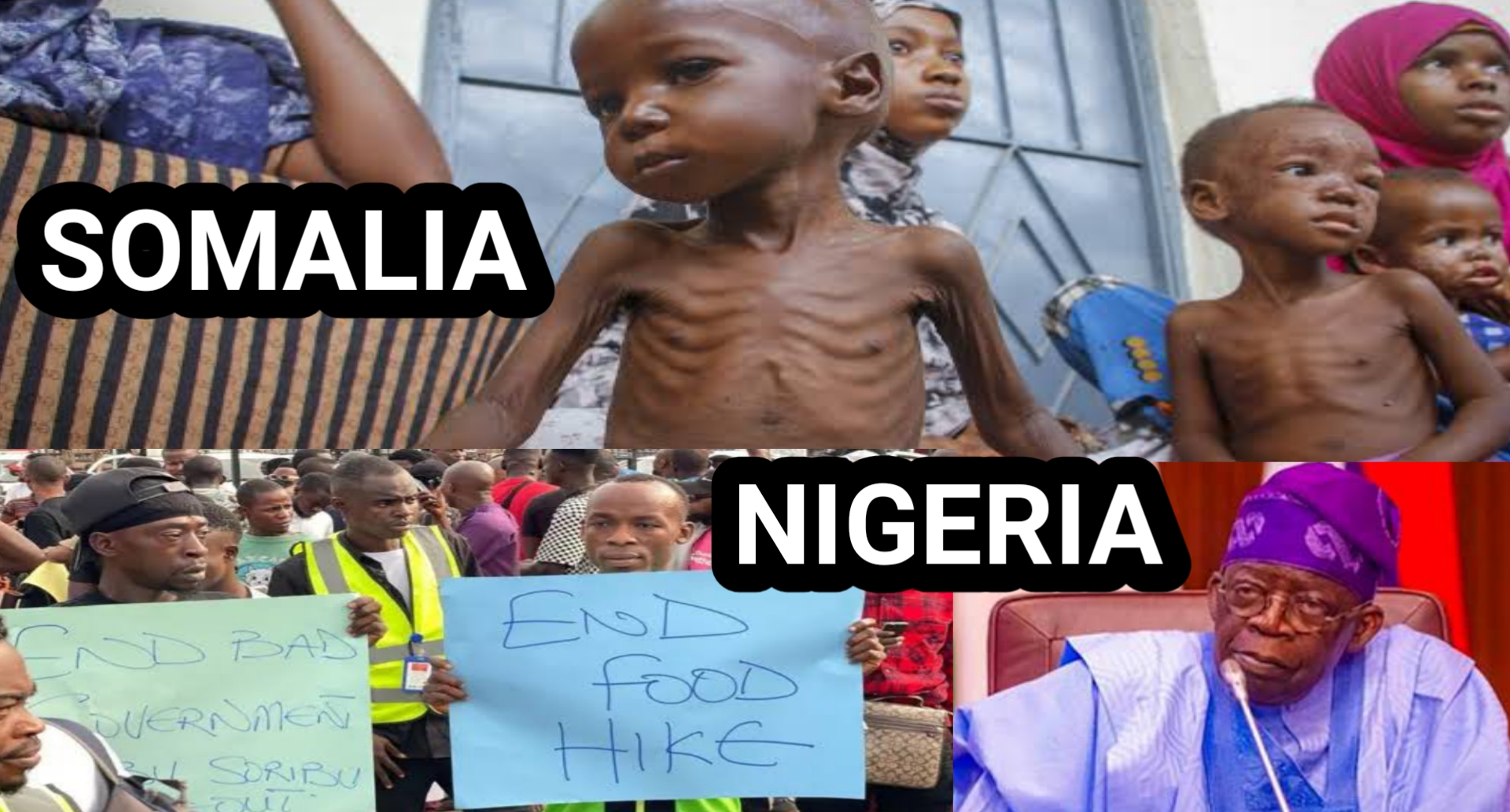
A United Nations report issued yesterday, listed about 18 locations in the world as ‘Hunger Hotspots” FAO-WFP early warning on acute food insecurity.
The report by Food and Agriculture Organization (FAO) and the World Food Programme (WFP), has included Nigeria in the list alongside Somalia, Sudan, Gaza and others locations
The report sends “early warnings on acute food insecurity’ calls for urgent humanitarian action to save lives and prevent starvation in 18 hotspots across the globe.”
According to the report, “In these places, acute hunger is at risk of worsening from June to October 2024.”
Since the previous edition of the Hunger Hotspots report (October 2023), the Central African Republic, Lebanon, Mozambique, Myanmar, NIGERIA, Sierra Leone and Zambia have joined Burkina Faso, Ethiopia, Malawi, Somalia and Zimbabwe in the list of hunger hotspots, where acute food insecurity is likely to deteriorate further during this outlook period.
In the report, prevention is emphasised as key to avert looming acute hunger crises in coming months in the listed 18 locations, “rather than an emergency response.”
“The daunting prospects highlighted in this report should serve as a wake-up call to all of us”, FAO Director-General QU Dongyu said. “Acting ahead of crises can save lives, reduce food shortages and protect livelihoods at a much lower cost than a not timely humanitarian response”.
“Once a famine is declared, it is too late – many people will have already starved to death”, said Cindy McCain, WFP Executive Director.
This edition of the report warns that La Niña conditions are expected to prevail between August 2024 and February 2025, significantly influencing rainfall distribution and temperatures.
The shift in climate could have significant implications for several hotspots, including the risk of floods in parts of South Sudan, Somalia, Ethiopia, Haiti, Chad, Mali and Nigeria, as well as Sudan.
Meanwhile, the Caribbean is bracing for an extremely active Atlantic hurricane season. The report warns that continuous monitoring will be vital due to the uncertainty of current forecasts.
The report spotlights the urgent need for assistance to prevent famine in Gaza and Sudan and further deterioration in the devastating hunger crises affecting Haiti, Mali, and South Sudan. It also warns of the lingering impact of El Niño and the looming threat of La Niña that risks bringing further climate extremes.