
Finance & Business
Upstream Pivot: Dangote Crude Oil Production Redefines African Energy Sovereignty
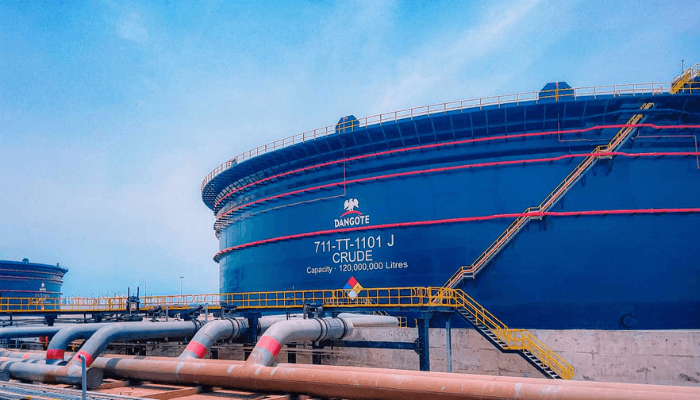
Specifically, early output has commenced from the Kalaekule field (OML 72). Current production is estimated at 4,500 barrels per day.

Editorial | Published: April 23, 2026
The narrative of African energy is being rewritten in the Niger Delta. The global market is reeling from the “second closure” of the Strait of Hormuz. Meanwhile, the Dangote Group has made a strategic move. This could insulate the West African sub-region from the next global shock. They have commenced their own independent crude oil production.
For years, the 650,000 barrels-per-day (bpd) Dangote Refinery has been a titan at the mercy of others. The facility is in the heart of Africa’s top oil producer. However, it has frequently imported crude from as far as the United States and Norway. This was done to bridge supply gaps. Today, that dependency ends.
1. From Refinery to Upstream Giant
The Dangote Group is transitioning from a refiner to a fully integrated energy powerhouse. It has started preliminary production from its Niger Delta assets. Specifically, early output has commenced from the Kalaekule field (OML 72).
Current production is estimated at 4,500 barrels per day, but this is merely the “testing” phase. Group leadership states that drilling operations are ramping up. The target is to reach 15,000 barrels per day in the coming weeks. There is also a long-term roadmap to scale up significantly. This isn’t just about output; it is about energy independence.
2. Solving the “Naira-for-Crude” Paradox
The primary driver for this upstream pivot is the persistent friction in domestic supply. The Nigerian government’s “Naira-for-Crude” initiative aims to stabilize fuel prices. It also seeks to conserve foreign exchange. Despite this, the refinery has often found itself at the back of the queue.
- The Shortfall: The refinery requires roughly 19 cargoes monthly to run at optimal capacity. However, it frequently receives less than 50% of that volume from domestic sources.
- The Cost: Buying “back-loaded” Nigerian crude from international traders involves paying a premium. This practice has historically increased the cost of petrol and diesel at the pump.
- The Solution: By producing its own feedstock, Dangote effectively bypasses the “middleman” traders and the bureaucratic hurdles of state-level allocations.
ALSO READ:
3. Impact on the 2026 Energy Market
The timing of this production launch is critical. As geopolitical tensions disrupt Middle Eastern shipments, Nigeria’s ability to refine its own crude becomes a matter of national security.
Beyond crude, the refinery is also building its own shipping presence to reduce logistics costs. Independent crude production combines with a dedicated shipping fleet. Along with a 650,000 bpd refining capacity, this creates a closed-loop system. It is nearly immune to external market volatility.
4. The Expertise and Authority Perspective
From an authoritative standpoint, this move validates Aliko Dangote’s long-standing critique of the Nigerian midstream and downstream sectors. For months, the refinery has accused regulators of issuing import licenses for “dirty” high-sulfur fuel. Meanwhile, local capacity remains underutilized.
Dangote has entered the upstream sector. He is no longer just a “buyer” complaining about the market. Now, he is a “producer” setting the market price. This vertical integration is a masterclass in economic authoritativeness.
5. What This Means for the Nigerian Consumer
For the average Nigerian, the impact is simple: Stability. The National Bureau of Statistics (NBS) reported a 41% decline in petrol imports for 2025 due to the refinery’s presence. The new upstream production should help curb the price hikes seen in early 2026. As the refinery moves toward its goal of 1.4 million barrels per day through planned expansions, it aims for 100% domestic fuel sufficiency. Achieving a surplus for export is finally within reach.
Conclusion: The New Energy Order
Nigeria is closing the era of exporting billions in crude. It no longer needs to import $5 billion in refined products. Dangote’s move into crude production is the final piece of the puzzle. It is a bold statement. The “Giant of Africa” is no longer content with being a commodity exporter. It is ready to be a global energy hub.
Intellectual Property & Content Protection Notice
© 2026 TrackingTimes.co All rights reserved.
This publication, including its text, structure, analysis, headlines, and original reporting, is protected under applicable international copyright laws.
No portion of this article may be copied, reproduced, modified, republished, distributed, scraped, translated, or stored in any retrieval system without the express written consent of TrackingTimes.co.
Content scraping, AI training usage, unauthorized reposting, or monetized reproduction is strictly prohibited and may attract civil and criminal penalties.
For syndication or licensing requests, contact: trackingtimes@gmail.com