
News & Politics
Africa’s New year Moment: Between Hope, Reform and Hard Choices
Africa’s relationship with global powers is also evolving. The United States, China, Europe, and emerging powers compete for influence.

EDITORIAL ON AFRICA
Africa’s New Year Moment: Between Hope, Reform and Hard Choices
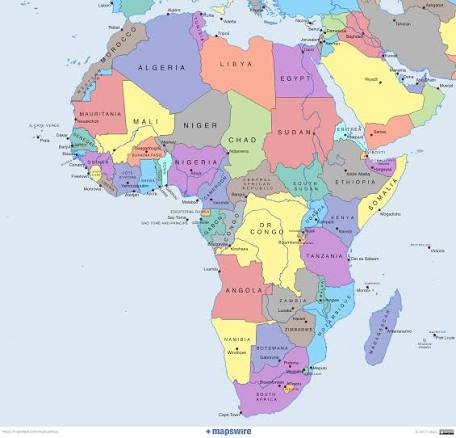
As a new year begins, Africa stands at a defining crossroads. From North to South, East to West, the continent enters the season with a mix of optimism, uncertainty, and urgency. Political transitions are influencing Africa’s direction. Security challenges are contributing to this change. Economic reforms play a significant role too. Additionally, the growing influence of young populations will echo far beyond its borders.
Across West Africa, military takeovers have occurred in several countries. These include Mali, Burkina Faso, and Niger. Their aftershocks continue to redefine governance conversations. Supporters of the juntas argue that sovereignty and security must come before external pressure. However, critics warn that prolonged military rule risks weakening institutions. They also caution against delaying democratic accountability. The Economic Community of West African States (ECOWAS) faces a difficult challenge. It must balance diplomacy, sanctions, and regional stability.
Nigeria, Africa’s most populous nation, enters the new year still grappling with inflation, currency volatility, and widespread security concerns. Yet Nigeria also represents resilience. Despite economic pressure, innovation in technology, creative industries, and youth entrepreneurship continues to expand. The country’s challenge is not the absence of talent, but the need for consistent policy, security reform, and institutional trust.
In East Africa, Kenya remains a focal point for reform debates. Protests over taxation, public spending, and governance have revealed a politically conscious population demanding transparency and accountability. Kenya’s role as a regional economic hub is crucial. It demonstrates that stability in one country can impact an entire sub-region. In the Horn of Africa, fragile peace efforts in Ethiopia highlight the continent’s ongoing challenges. Instability in Sudan also contributes to these challenges. These unresolved conflicts carry heavy humanitarian costs.
Southern Africa begins the year with major political recalibrations. South Africa, long regarded as a continental anchor, faces pressure to revive its economy. It must address energy shortages. The country needs to restore public confidence after tightly contested elections. In Zimbabwe, economic reform and currency stability remain central to public debate. Neighboring countries watch closely. They know that regional economies are deeply interconnected.
In North Africa, geopolitical positioning is increasingly prominent. Countries like Egypt, Libya, and Tunisia are experiencing economic strain. They are also facing migration pressures. Additionally, these countries manage complex diplomatic relationships with Europe and the Middle East. The Mediterranean corridor has become not just a migration route, but a strategic space where African and European interests intersect.
Security remains one of Africa’s most urgent challenges. Armed groups are spreading across the Sahel. There are piracy concerns in the Gulf of Guinea. In parts of Mozambique, insurgency threats are emerging. These issues highlight the need for coordinated regional responses. Yet security is not only a military issue. Many African analysts emphasize that unemployment, inequality, and weak governance are just as critical to long-term peace as battlefield victories.
Economically, Africa begins the year with cautious optimism. Several countries are pushing fiscal reforms, debt restructuring, and investment-driven growth. Ghana’s debt negotiations, Rwanda’s technology-led development, and Morocco’s industrial expansion reflect different paths toward economic resilience. However, global inflation, climate shocks, and shifting trade dynamics continue to test fragile gains.
Climate change is no longer a future concern—it is a present reality. In Nigeria, floods and herders or bandits widespread attacks on farmers, have disrupted livelihoods. Droughts in the Horn of Africa have caused similar issues. Cyclones in Southern Africa have exposed infrastructure weaknesses. These events underscore the urgency of climate adaptation strategies tailored to African realities rather than imported solutions.
ALSO READ:
- Ghana’s New Economic Recovery Plan and African Resilience
- Kanu’s January Warning: Prophetic Insights, Sokoto Concerns & National Alerts
One of Africa’s strongest assets entering the new year is its people. The continent has the world’s youngest population, and youth voices are increasingly shaping public discourse. From civic activism to digital entrepreneurship, young Africans are challenging old political norms and demanding inclusion. Their expectations are reshaping how leadership is judged.
Watch the most powerful and prophetic prayer warfare, and predictions for 2026:
UNVEILED SECRETS! WHAT TO EXPECT IN 2026 + Prophetic Warfare & Divine Direction
Africa’s relationship with global powers is also evolving. The United States, China, Europe, and emerging powers compete for influence. Meanwhile, African nations are asserting more agency in defining partnerships. The shift toward multipolar diplomacy offers opportunity, but it also requires strategic clarity to avoid dependency and protect sovereignty.
As the year unfolds, Africa’s story will not be written by a single event or country. It will be shaped by choices—choices about governance, inclusion, security, and economic direction. The continent’s diversity means that progress will be uneven, but the collective momentum toward reform, accountability, and self-definition is unmistakable.
The new year presents Africa with hard choices, but also rare opportunities. The response of leaders and citizens is crucial. It may determine if the continent moves closer to stability and shared prosperity. Alternatively, it might remain caught between promise and postponement.
Intellectual Property & Content Protection Notice
Intellectual Property & Content Protection Notice
© 2026 TrackingTimes.co All rights reserved.
This publication, including its text, structure, analysis, headlines, and original reporting, is protected under applicable international copyright laws.
No portion of this article may be copied, reproduced, modified, republished, distributed, scraped, translated, or stored in any retrieval system without the express written consent of TrackingTimes.co.
Content scraping, AI training usage, unauthorized reposting, or monetized reproduction is strictly prohibited and may attract civil and criminal penalties.
For syndication or licensing requests, contact: trackingtimes@gmail.com