Featured
US Embassy Closure in Abuja: What It Reveals About Nigeria’s Deepening Security Crisis
The development signals growing global concern over Nigeria’s internal security environment

By Maxwell Nnawuihe | Editorial | April 10, 206
Quick Summary
- The U.S. Mission in Nigeria ordered the departure of non-emergency staff due to security concerns
- The U.S. Embassy in Abuja suspended routine operations amid protest risks
- Nigeria remains under Level 3 (Reconsider Travel), with some areas at Level 4 (Do Not Travel)
- The development signals growing global concern over Nigeria’s internal security environment
- Raises urgent questions for governance, diplomacy, and national stability
INFOGRAPHIC: Timeline of Key Events
📅 Timeline of Escalation

Introduction: A Diplomatic Signal the World Cannot Ignore
When a foreign government begins withdrawing its personnel, it is rarely a routine administrative decision. It is a signal—quiet but powerful—that something deeper is unfolding beneath the surface.
The recent move by the United States Mission in Nigeria to authorize the departure of non-emergency staff from its Abuja embassy is not just about logistics. It is about risk assessment, intelligence interpretation, and confidence in a host nation’s security capacity.
This editorial goes beyond headlines to unpack what this decision means—for Nigeria, for its global image, and for its future.
1. What Actually Happened? Understanding the Official Position
According to the official communication:
“The Department of State authorized non-emergency U.S. government employees and their families to leave due to the deteriorating security situation.”
This aligns with earlier precautionary steps taken by the embassy, including:
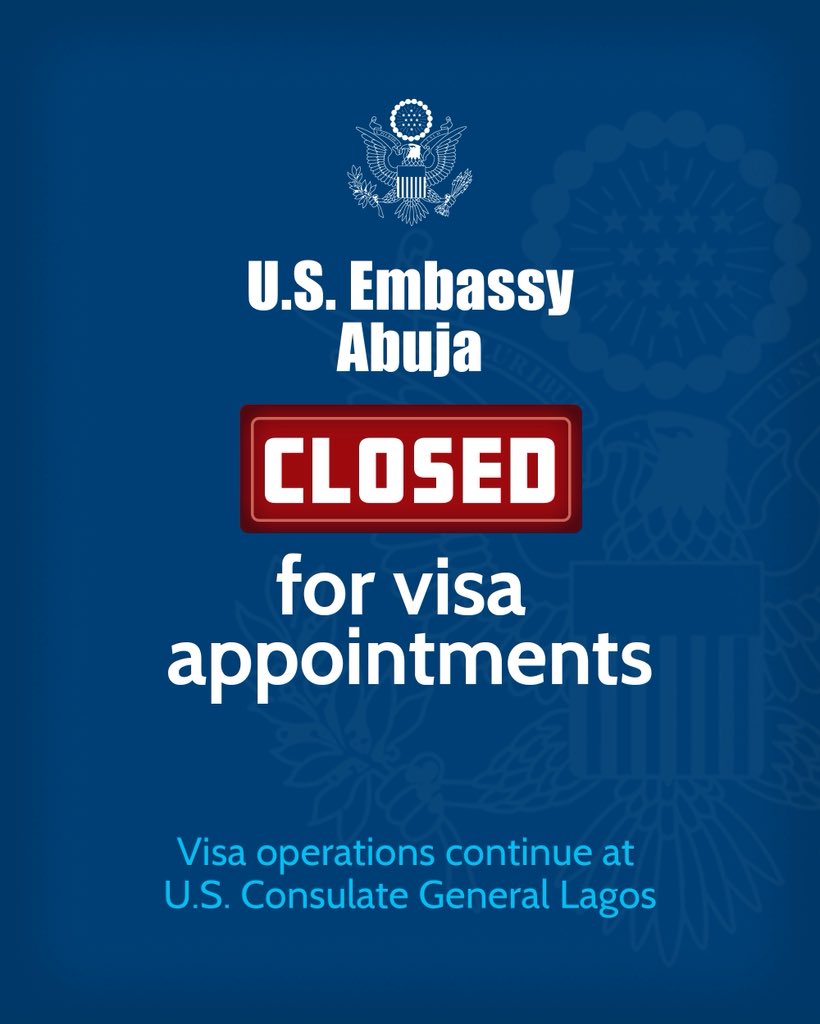
- Cancellation of visa appointments
- Suspension of routine consular services
- Advisory warnings about protests and unrest
Reports indicate that the embassy had already shut down routine operations temporarily due to anticipated protests linked to global tensions, particularly involving U.S. foreign policy actions. (Punch Newspapers)
This suggests a gradual escalation of concern, not a sudden reaction.
“Nigeria: On April 8, 2026, the Department of State authorized non-emergency U.S. government employees and U.S. government employee family members to leave U.S. Embassy Abuja due to the deteriorating security situation. The overall Travel Advisory for Nigeria is Level 3: Reconsider Travel. Some specific states are at Level 4: Do Not Travel.” —US Mission Nigeria
INFOGRAPHIC: Travel Risk Level Explained
🌍 U.S. Travel Advisory Levels

2. The Security Reality: Perception vs. Denial
Nigeria’s security narrative has long been contested.
On one hand, official statements often emphasize control and progress. On the other, international advisories continue to paint a more cautious picture.
The U.S. travel advisory remains:
- Level 3: Reconsider Travel (nationwide)
- Level 4: Do Not Travel (specific states)
These classifications are not arbitrary. They reflect:
- Persistent insurgency threats
- Banditry and kidnappings
- Urban protest volatility
- Weak enforcement capacity in certain regions
The embassy’s decision reinforces a difficult truth:
Global confidence in Nigeria’s internal security is under strain.
INFOGRAPHIC: Key Risk Factors in Nigeria
⚠️ Security Risk Indicators
| Risk Category | Primary Drivers | Operational Impact |
| Insurgency | Sustained activity in Northern regions | Restricted movement; disrupted supply chains |
| Banditry & Kidnappings | High-risk transit corridors and rural zones | Threat to personal safety; travel limitations |
| Urban Volatility | Spontaneous protests and public unrest | Business interruptions; localized lockdowns |
| Economic Pressure | Rising inflation and financial stress | Increased social tension and crime rates |
| Enforcement Gaps | Weak security presence in remote areas | Heightened vulnerability in “gray zones” |
3. The Trigger: Protests, Global Conflict, and Domestic Fragility
The immediate cause of the embassy’s shutdown appears linked to:
- Potential protests in Abuja
- Rising tensions tied to international conflicts
- Historical patterns of protests escalating into violence
The U.S. Mission explicitly warned of demonstrations that could turn volatile, referencing past incidents where protests led to clashes with security forces. (Punch Newspapers)
But protests alone do not explain such a strong diplomatic reaction.
The deeper issue:
Nigeria’s fragile security environment amplifies every trigger.
In more stable systems, protests are manageable.
In fragile ones, they become flashpoints.
ALSO READ:
4. A Pattern of Precaution: Not an Isolated Incident
This is not the first time foreign missions have adjusted operations in Nigeria due to security fears.
Recent steps include:
- Temporary closure of embassy operations
- Rescheduling of visa and consular services
- Advisories urging citizens to remain indoors
The embassy itself confirmed closures “until Monday, March 9” as a precautionary measure. (Nigeria Info, Let’s Talk!)
This pattern shows institutional caution, not panic—but also not confidence.
The United States is authorizing some embassy staff and families to leave Nigeria as security conditions worsen in the African country.
The decision follows recent deadly attacks during Easter and growing concerns about terrorist activity throughout the region.
—Fox News
5. Diplomatic Implications: What This Means for Nigeria
Diplomacy operates on signals.
And this signal carries weight.
a. Investor Confidence
Foreign investors closely watch security advisories.
An embassy drawdown may translate into:
- Delayed investments
- Increased risk premiums
- Reduced economic engagement
b. International Image
Nigeria risks being perceived as:
- Unstable
- High-risk
- Politically unpredictable
c. Strategic Relationships
Even strong allies reassess engagement when:
- Staff safety becomes uncertain
- Operational continuity is threatened
6. Governance Questions: Who Owns the Narrative?
A critical question emerges:
Who defines Nigeria’s security reality—the government or external observers?
If domestic assurances contradict international actions, credibility becomes contested.
This situation exposes a communication gap:
- Government: “Security is improving”
- Foreign missions: “Reduce presence, increase caution”
Bridging this gap is essential.
7. The Human Angle: Nigerians Caught in the Middle
Beyond diplomacy and policy, this situation affects ordinary people:
- Visa applicants face delays
- Businesses lose international engagement opportunities
- Citizens experience heightened anxiety
More importantly, it reinforces a psychological burden:
When outsiders perceive danger, citizens begin to internalize it.
Mr. Peter Obi posted on his official X account:
U.S. Security Alarm on Nigeria: A Bad Omen
“The recent directive by the United States to evacuate its embassy staff from Nigeria due to rising insecurity is deeply worrisome and should be treated as a national emergency, especially for a country already struggling to attract investors.
“Nigeria currently ranks fourth in the Global Terrorism Index, yet insecurity continues to worsen – lives are being lost and communities remain under constant threat. There is a glaring absence of effective governance; instead, what prevails are schemes that undermine democratic processes, as though politics has taken precedence over the safety of citizens.
“The U.S. directive is a clear signal of declining confidence in our national security architecture. Disturbingly, reports indicate the loss of yet another Army Brigadier General to terrorists in Borno earlier today. A nation where people cannot live, work, worship, or travel safely cannot progress or attract investment.
“The primary duty of any government is the protection of lives and property, yet in this regard, we as leaders have fallen short over the years. Our failure continues to place immense strain on our troops, who make the ultimate sacrifices.
“Sadly, as Nigeria deteriorates, we as leaders, like Nero, remain preoccupied with politics, forgetting that without security, there is no nation to govern and no future to campaign for.”
A New Nigeria is POssible. -PO
8. The Tinubu Administration: A Defining Moment
For President Bola Ahmed Tinubu’s administration, this development is more than a diplomatic inconvenience.
It is a test of leadership.
Key expectations include:
- Clear security strategy
- Transparent communication
- Measurable improvements in safety
- Engagement with international partners
Failure to respond decisively risks:
- Erosion of public trust
- Increased international skepticism
- Political vulnerability
9. Media Narratives and Global Framing
International media coverage—including reports highlighting the embassy’s precautionary measures—shapes global perception.
But beyond media framing lies a deeper issue:
Narratives follow actions.
If embassies withdraw staff, the story writes itself.
What Happens Next?
| 🔍 Possible Scenarios: 2026 Security Outlook |
| Scenario | Condition | Likely Outcome |
| Recovery | Improved security measures | Gradual return of non-emergency staff |
| Stagnation | Continued tension and instability | Extended restrictions and service pauses |
| Crisis | Further escalation of conflict/protests | Stronger global warnings and full evacuation |
10. The Bigger Picture: A Nation at a Crossroads
Nigeria stands at a critical intersection:
- A nation of immense potential
- Yet challenged by persistent insecurity
The embassy closure is not the crisis.
It is a symptom of a larger structural issue.
The real questions are:
- Can Nigeria guarantee safety in its capital?
- Can institutions respond effectively to threats?
- Can trust—both local and global—be rebuilt?
Conclusion: A Wake-Up Call, Not Just a Headline
The U.S. Embassy’s decision should not be dismissed as routine diplomacy.
It is a strategic warning.
Not of imminent collapse—but of growing concern.
Nigeria’s response in the coming weeks will determine whether this moment becomes:
- A turning point toward reform
or - Another entry in a long list of missed opportunities
Intellectual Property & Content Protection Notice
© 2026 TrackingTimes.co All rights reserved.
This publication, including its text, structure, analysis, headlines, and original reporting, is protected under applicable international copyright laws.
No portion of this article may be copied, reproduced, modified, republished, distributed, scraped, translated, or stored in any retrieval system without the express written consent of TrackingTimes.co.
Content scraping, AI training usage, unauthorized reposting, or monetized reproduction is strictly prohibited and may attract civil and criminal penalties.
For syndication or licensing requests, contact: trackingtimes@gmail.com