
Finance & Business
The $3.5 Trillion Handshake: Nigeria Launches AfCFTA Digital Payments Roadmap
For decades, the Nigerian trader has been strangled by the “USD Detour.” This archaic financial loop forced a merchant in Lagos to route Naira through a correspondent bank in New York

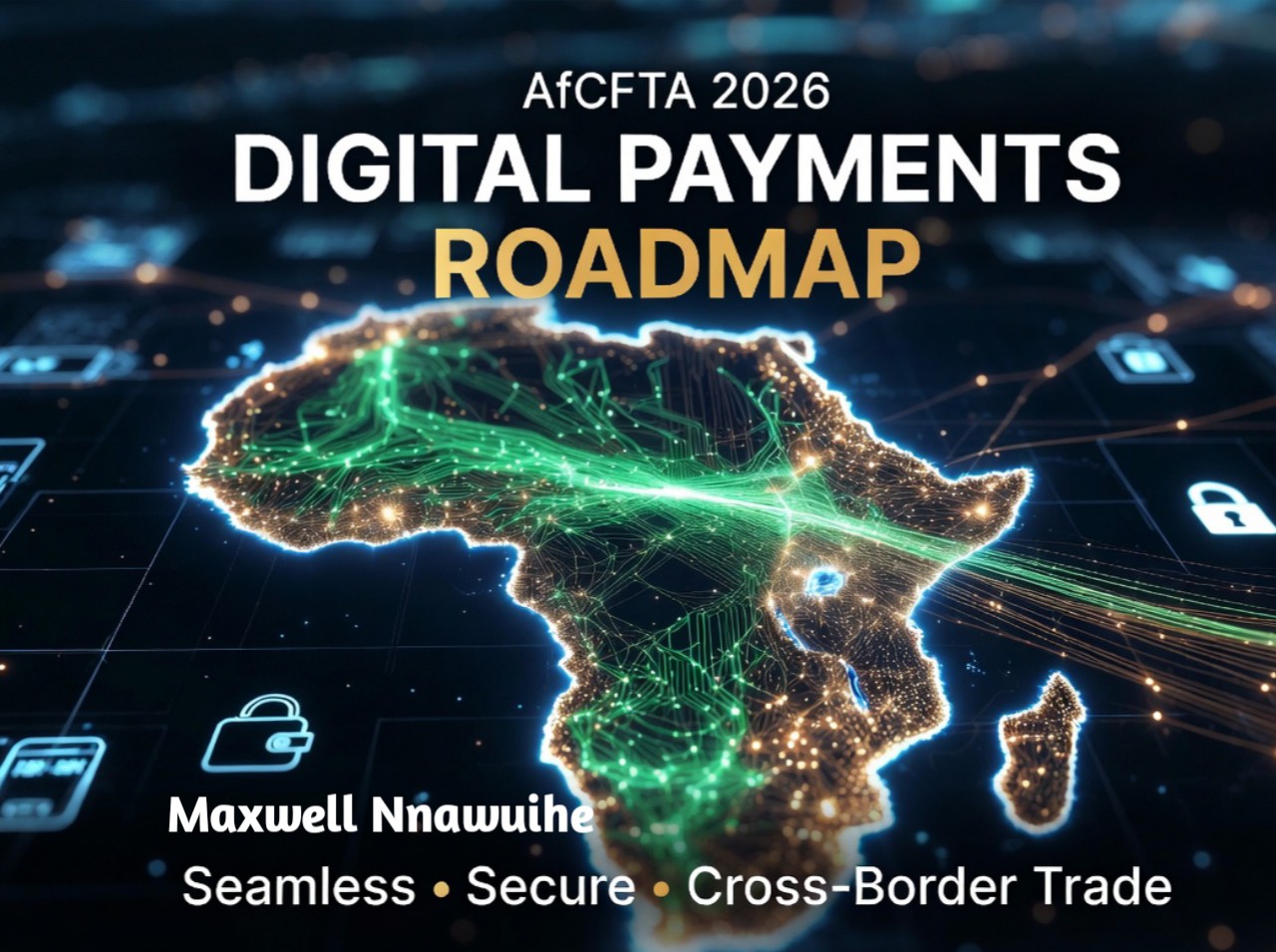
By Maxwell Nnawuihe | Published: April 1, 2026
The Abuja Declaration: Unlocking the MSME Corridor
The Office of the Vice President unveiled a landmark report on Monday, March 30, 2026. This was done in collaboration with ODI Global at the State House. Titled “Cross-Border Digital Payments and Identity in Nigeria under the AfCFTA,” this is a high-level document. It serves as a strategic roadmap for the nation’s economic expansion. The objective is singular. It is an ambitious aim to provide Nigeria’s 40 million MSMEs with the digital tools they need. These tools are required for seamless access to a staggering $3.5 trillion continental market.
Deputy Chief of Staff Senator Ibrahim Hassan Hadejia represented President Bola Ahmed Tinubu. He emphasized that Nigeria is no longer a passive participant in the African Continental Free Trade Area. The launch of the Nigeria Digital Trade Strategy has changed this. The country is now the primary architect of Africa’s digital trade agenda. The report identifies the integration of the Bank Verification Number (BVN) and National Identification Number (NIN) as the “Trust Infrastructure.” This integration is needed to replace informal, inefficient payment methods. The Federal Government is empowering small businesses to scale beyond domestic borders. Its aim is to transform the AfCFTA from a mere diplomatic agreement into a high-velocity trade juggernaut. This transformation will domesticate African prosperity and drive mass job creation across the federation.
The “USD Detour” is Ending
For decades, the Nigerian trader has been strangled by the “USD Detour.” This archaic financial loop forced a merchant in Lagos to route Naira through a correspondent bank in New York. There, it was converted into U.S. Dollars. It was then converted a second time into Ghanaian Cedis or Kenyan Shillings upon arrival. This process was inefficient and multi-hop. It siphoned billions in unnecessary transaction fees and foreign exchange spreads. This often added 8% to 15% to the total cost of trade.
The March 30 Abuja report identifies the Pan-African Payment and Settlement System (PAPSS) as the “critical rail.” It is designed to kill this detour. By providing a centralized clearing house for the continent, PAPSS delivers two game-changing benefits:
- Instant Settlement: Traditional “Swift” transfers could take up to seven days. In contrast, PAPSS transactions now settle in under 120 seconds. This real-time liquidity allows MSMEs to rotate their capital faster, increasing their annual turnover.
- Local Currency Focus: The system allows traders to buy and sell directly in Naira. This drastically reduces the demand for “hard currency” for intra-African trade. This structural shift helps preserve Nigeria’s foreign exchange reserves—which hit a 13-year high of $48.5 billion in February 2026—and significantly alleviates the speculative pressure on the Naira-to-Dollar exchange rate.
Fintech as the New Frontier: PalmPay and Moniepoint
The Federal Government’s March 30 report explicitly recognizes the private sector as the primary engine for AfCFTA’s success. The monumental goal of continental trade cannot be achieved through traditional banking alone. Integrating Nigerian fintech giants like PalmPay and Moniepoint is essential. In January 2026, the Central Bank of Nigeria (CBN) upgraded these platforms to National Microfinance Bank licenses. Since then, they have transitioned from simple local wallets into sophisticated regional trade tools. Their vast and active user bases are largely comprised of the “informal” and small-scale sector. This provides the infrastructure needed to drive the adoption of digital payments across West Africa.
A historic milestone in this journey occurred in February 2026. It marked the launch of the first wallet-based outbound payment corridor between Nigeria and Ghana. The CBN approved this pilot. It is powered by a partnership between Onafriq and PAPSS. This initiative allows a small-scale entrepreneur in Aba’s leather market to pay a supplier in Accra. A grain trader in Kano can also make payments directly from their mobile wallet in real-time.
For the Nigerian SME, the benefits are revolutionary:
- Naira-to-Naira Settlement: Payments are made in Naira. They are received in Cedis. This removes the need for a “middleman” currency like the U.S. Dollar.
- Bypassing the Banking Bureaucracy: Small businesses no longer need to provide complex “Form M” documentation for small-value cross-border transactions. The fintech rails handle compliance and KYC through the linked BVN/NIN system.
- Instant Liquidity: Funds are delivered in under 120 seconds. You don’t have to wait 3 to 5 days for a wire transfer to clear. This speed allows traders to secure goods and restock faster than ever before. This “borderless” fintech era is transforming the mobile phone into a global trade terminal for millions of Nigerians.
- Have you tried using your fintech wallet for cross-border trade yet? Share your experience in the comments below.
The Identity Pillar: Linking BVN/NIN to the Continent
The March 30 report makes a definitive case. In the digital age, payments cannot move without a foundation of absolute trust. Integrating Nigeria’s Bank Verification Number (BVN) and National Identification Number (NIN) into a unified system is essential. This will create a cross-border “Digital Identity Framework”. It is the crucial last step in the AfCFTA puzzle. This framework acts as a “Digital Passport” for MSMEs. It allows a business owner in Aba or Kano to be instantly verified by a bank in Accra or Cairo. There is no need for physical documentation or redundant verification processes.
This integration is particularly timely. It follows the Central Bank of Nigeria’s (CBN) March 2026 directive. The directive mandated that all financial institutions deploy automated Anti-Money Laundering (AML) systems. These systems are linked directly to national identity databases. By anchoring every transaction to a verified BVN or NIN, Nigeria ensures secure and compliant trade. Trade becomes “seamless” and remains rigorously secure. It fully complies with global AML/CFT/CPF standards. This “Trust Infrastructure” does more than just stop fraud; it de-risks the entire Nigerian MSME sector for international partners. A foreign supplier can verify a Nigerian buyer’s government-linked digital identity. This lowers the barriers to credit. This opens the door to high-volume trade. In 2026, identity is more than just a regulatory requirement. It is the ultimate currency of the African Continental Free Trade Area.
Technical Backbone: NIBSS, ISO 20022, and the End of Payment Friction
The “Abuja Declaration” succeeds due to a massive technical upgrade. This quiet upgrade occurred within the Nigeria Inter-Bank Settlement System (NIBSS). As of the March 31, 2026, the bank recapitalization deadline approached. NIBSS completed the full transition of its National Payment Stack (NPS) to the ISO 20022 global standard.
ALSO READ:
Why does this matter for a trader in Onitsha?
- Rich Transaction Data: Unlike old systems that only showed “Transfer,” the new ISO 20022 rail allows for “structured data.” This means invoice numbers, tax IDs (TIN), and legal identifiers are embedded directly in the payment.
- The PAPSS Handshake: This technical alignment allows real-time communication between the Pan-African Payment and Settlement System (PAPSS) and Nigerian banks. By utilizing the NIBSS HAWK fraud-monitoring system and BVN Watchlisting, Nigeria is now exporting its security standards across the continent.
- The Simplified Trade Regime (STR): Just last week, on March 26, the AfCFTA Secretariat selected Nigeria. Nigeria is the pilot country for the Simplified Trade Regime in West Africa. This regime is supported by the Nigeria Customs Service (NCS). It uses digital declaration systems. These systems ensure that low-value e-commerce is not strangled by complex paperwork at the borders. Low-value e-commerce is the bread and butter of Nigerian youth and women entrepreneurs.
The integration of these “digital rails” will lead to a significant change by mid-2026. A “Made in Nigeria” label will have support from a “Paid in Nigeria” digital receipt. This receipt will be recognized from Cairo to Cape Town.
Maxwell’s Institutional Insight: The “Bionic” Shift
The March 30, 2026, Abuja report launch is more than a policy update. It represents a “Trust Revolution” for the African continent. For the Nigerian entrepreneur, the message from the Presidency is clear: our national borders are no longer fiscal roadblocks. They are no longer bureaucratic barriers. They have been re-engineered into digital gateways. As we enter the second quarter of 2026, the competitive landscape has fundamentally shifted. The businesses that will survive are those that actively leverage these new “Digital Rails.” These businesses will thrive by bypassing traditional currency friction.
To lead in this new era, the Nigerian MSME must adopt a Bionic growth mindset. This involves combining local artisanal excellence with high-velocity digital trade infrastructure. We are no longer limited to the 200 million consumers within our domestic borders. The integration of PAPSS, BVN-linked identity, and 5G-enabled fintech wallets has effectively opened a direct corridor to 1.4 billion people across the African Continental Free Trade Area. At TrackingTimes.co, our analysis shows that “First Movers” integrating these cross-border payment protocols today will become tomorrow’s institutional titans. The era of the “Isolated Trader” is over; the era of the Pan-African Digital Sovereign has officially begun.
Intellectual Property & Content Protection Notice
© 2026 TrackingTimes.co All rights reserved.
This publication, including its text, structure, analysis, headlines, and original reporting, is protected under applicable international copyright laws.
No portion of this article may be copied, reproduced, modified, republished, distributed, scraped, translated, or stored in any retrieval system without the express written consent of TrackingTimes.co
Content scraping, AI training usage, unauthorized reposting, or monetized reproduction is strictly prohibited and may attract civil and criminal penalties.
For syndication or licensing requests, contact: trackingtimes@gmail.com