
Global Affairs
US–Israel–Iran Escalation: Why the Middle East Is Entering a Dangerous New Phase
The current phase of escalation has been driven by a series of interconnected events rather than a single flashpoint.

EDITORIAL
A Region on Edge
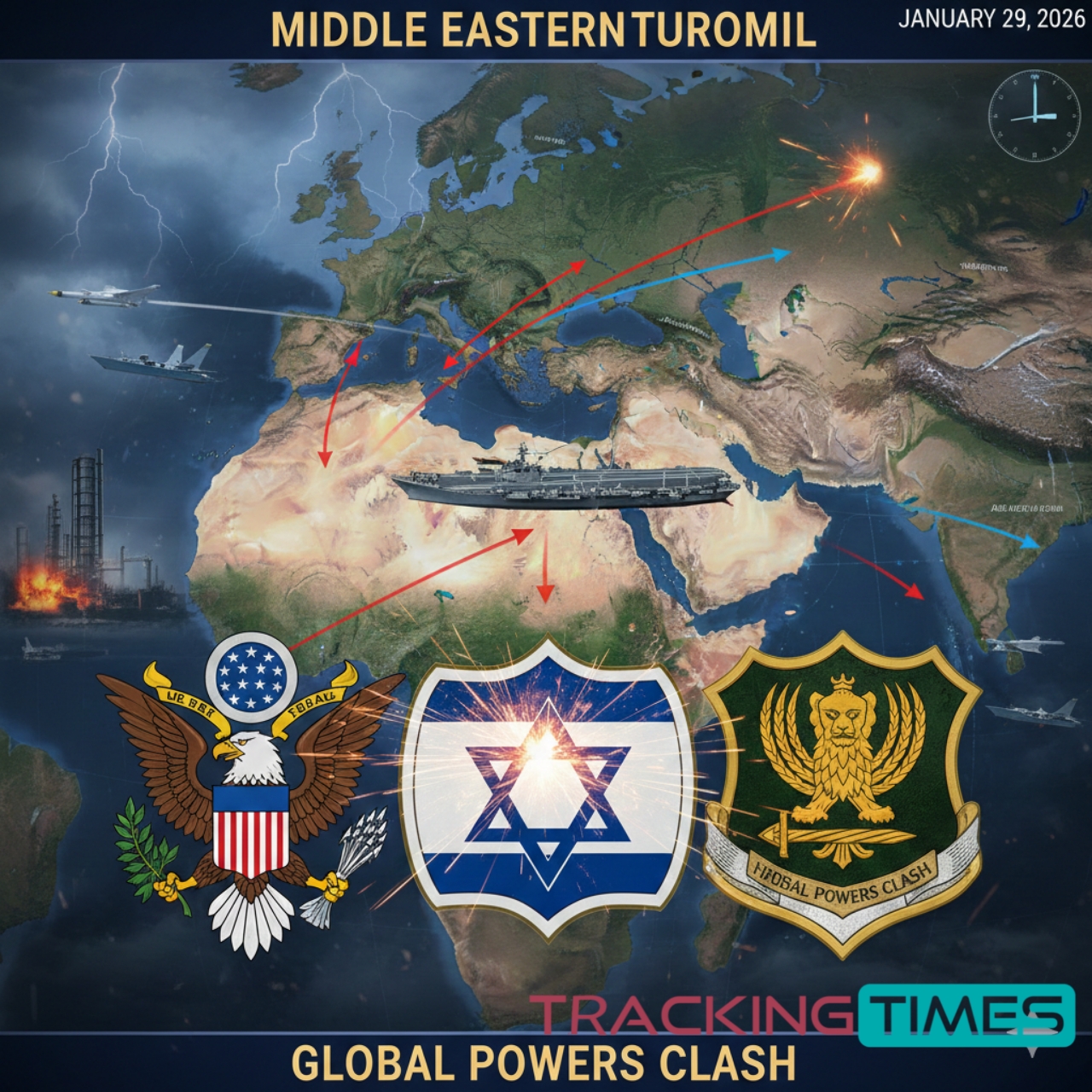
Tensions between the United States, Israel, and Iran have entered one of their most volatile phases in years. This situation raises global concerns about the possibility of a wider Middle East conflict. While outright war has not been declared, recent actions and counteractions have occurred. Strategic messaging suggests that the region is on a precarious path. It is navigating between deterrence and disaster.
This escalation is not the result of a single incident. Rather, it reflects years of unresolved disputes, shifting alliances, and growing mistrust among major regional and global powers.
Understanding the Core Players
To grasp the seriousness of the current escalation, we must understand the roles and interests of the three main actors.
Israel views Iran as its most significant existential threat. This is particularly because of Tehran’s nuclear ambitions. Additionally, Iran supports armed groups hostile to Israeli security.
Iran considers Israel an illegitimate state and sees the United States as a destabilizing force in the Middle East. Tehran positions itself as a regional power resisting Western dominance.
The United States, Israel’s strongest ally, maintains a military presence across the Middle East. It has repeatedly vowed to prevent Iran from acquiring nuclear weapons.
These competing interests have created a fragile balance—one that recent developments have severely strained.
What Triggered the Latest Escalation?
The current phase of escalation has been driven by a series of interconnected events rather than a single flashpoint.
- Increased Israeli military actions against Iran-linked targets in the region
- Rising Iranian threats and retaliatory warnings
- Expanded US military deployments and security assurances to Israel
- Heightened tensions involving Iran-backed groups in Lebanon, Syria, Iraq, and Yemen
Each move has been framed as defensive, yet each has pushed the region closer to confrontation.
Iran’s Strategic Posture
Iran has adopted what analysts describe as a “strategic patience with sharp responses” approach.
Rather than engaging in direct large-scale warfare, Tehran relies on:
- Regional allies and proxy groups
- Political pressure and diplomatic messaging
- Demonstrations of military capability
Iran consistently denies seeking nuclear weapons, insisting its nuclear program is for peaceful purposes. However, enrichment activities and reduced cooperation with international inspectors have fueled skepticism and alarm among its rivals.
Israel’s Security Calculus
Israel’s leadership has made it clear that it will not tolerate a nuclear-armed Iran.
From Israel’s perspective:
- Preemptive action is preferable to reactive defense
- Regional threats must be neutralized before they mature
- US backing is critical but not guaranteed in every scenario
Israel’s security doctrine prioritizes deterrence, intelligence superiority, and swift military responses. This approach, while effective in the short term, carries long-term risks of escalation.
The United States: Balancing Deterrence and Restraint
The US finds itself walking a tightrope.
On one hand, Washington is committed to Israel’s security and regional stability. On the other, it seeks to avoid being drawn into another prolonged Middle East conflict.
US strategy currently focuses on:
- Military deterrence without direct engagement
- Diplomatic pressure and sanctions
- Protecting shipping routes and regional allies
However, miscalculations—by any party—could force the US into a more direct role.
Why This Escalation Is Different
What makes the current escalation particularly dangerous is the density of flashpoints across the region.
Unlike past standoffs limited to one country or border, tensions now span:
- Gaza and southern Israel
- Southern Lebanon
- Syria and Iraq
- The Red Sea and Gulf region
This interconnectedness increases the risk that a localized incident could rapidly spiral into a multi-front crisis.
Global Economic and Political Implications
The consequences of a wider conflict would extend far beyond the Middle East.
Potential global impacts include:
- Disruption of global energy supplies
- Increased oil and gas prices
- Market instability and investor uncertainty
- Heightened geopolitical polarization
For many countries already grappling with inflation and economic recovery, such disruptions could be severe.
Diplomatic Efforts and Their Limits
Despite rising tensions, diplomacy has not disappeared.
Regional and international actors continue to push for:
- De-escalation through backchannel talks
- Renewed negotiations on nuclear monitoring
- Confidence-building measures
However, trust remains low, and domestic political pressures in all three countries make compromise difficult.
ALSO READ:
The Risk of Miscalculation
Perhaps the greatest danger is not intentional war, but miscalculation.
History shows that major conflicts often begin with:
- Misinterpreted signals
- Accidental strikes
- Overconfidence in deterrence
In a region crowded with military assets and unresolved grievances, the margin for error is extremely thin.
What to Watch Going Forward
Key indicators that could signal either escalation or restraint include:
- Changes in Iran’s nuclear activities
- Shifts in US military posture
- Israeli political and security announcements
- Regional diplomatic engagements
Observers agree that the coming months will be critical in determining whether tensions cool—or erupt.
Conclusion: A Fragile Moment for Global Security
The US–Israel–Iran escalation represents more than a regional dispute. It is a test of modern deterrence, diplomacy, and crisis management in a deeply interconnected world.
While war is not inevitable, the current trajectory underscores the urgent need for restraint, communication, and credible diplomatic pathways. The cost of failure would be felt not only in the Middle East, but across the global system.
Intellectual Property & Content Protection Notice
Intellectual Property & Content Protection Notice
© 2026 TrackingTimes.co All rights reserved.
This publication, including its text, structure, analysis, headlines, and original reporting, is protected under applicable international copyright laws.
No portion of this article may be copied, reproduced, modified, republished, distributed, scraped, translated, or stored in any retrieval system without the express written consent of TrackingTimes.co.
Content scraping, AI training usage, unauthorized reposting, or monetized reproduction is strictly prohibited and may attract civil and criminal penalties.
For syndication or licensing requests, contact: trackingtimes@gmail.com