
Global Affairs
US-Iran Military Build Up, Israel Escalations—Tracking Times
The nuclear-powered aircraft carrier USS Abraham Lincoln leads this naval strike group.

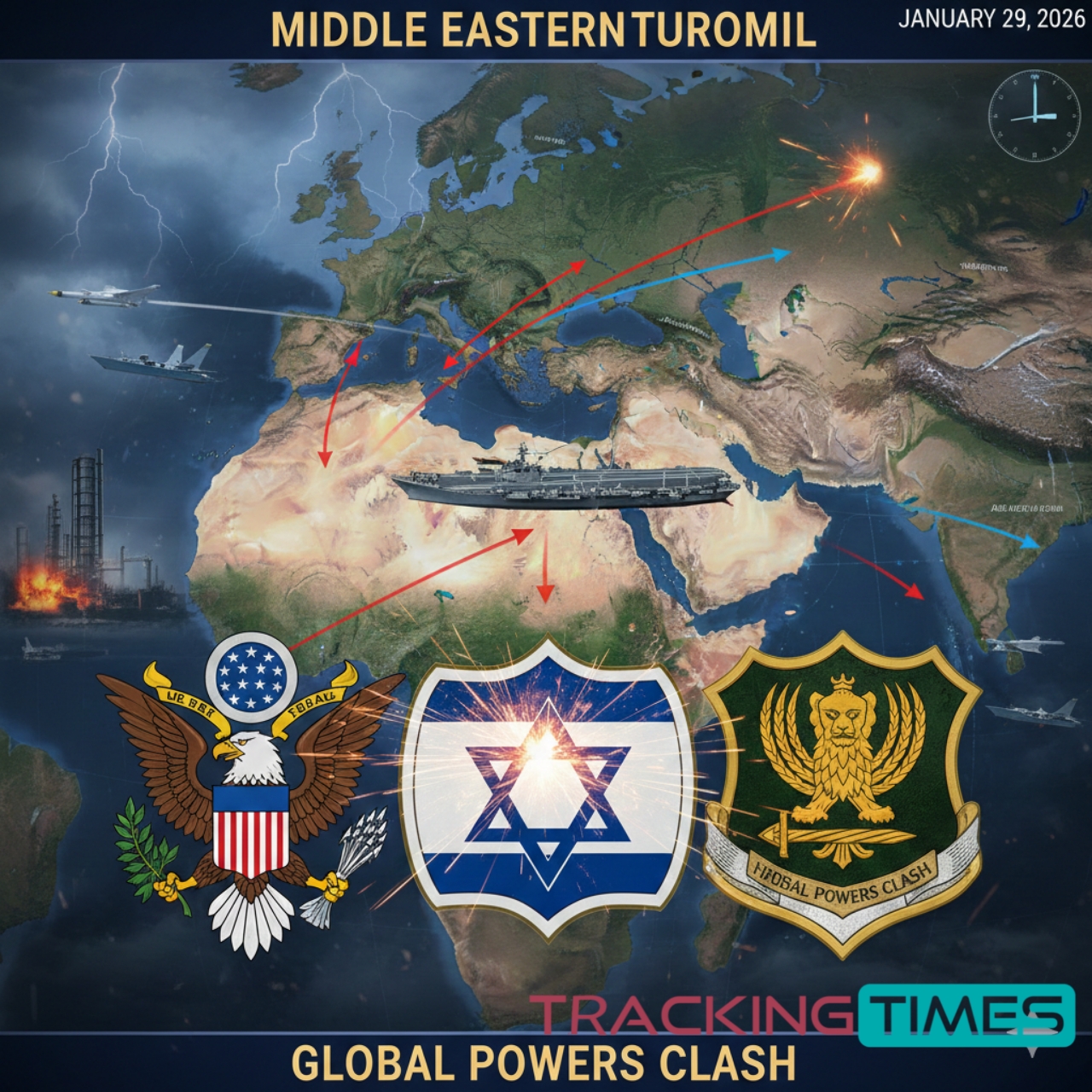
As of January 29, 2026, tensions between the United States, Israel, and Iran have reached a critical point. They are escalating rapidly. Significant military movements are occurring. High-level war planning is currently underway.
Here is a summary of the current situation:
1. Major US Military Buildup
The United States has deployed what President Donald Trump has described as a “massive armada” to the Middle East. The nuclear-powered aircraft carrier USS Abraham Lincoln leads this naval strike group. It includes destroyers, guided-missile cruisers, and squadrons of fighter jets. US officials have stated this deployment is a show of force designed to present a credible threat of military action.
2. Catalyst: Protests in Iran and Government Crackdown
A primary driver of the current escalation is a wave of widespread anti-government protests. These protests began in Iran in late December 2025. Initially sparked by a collapsing economy and currency devaluation, the demonstrations have evolved into calls for regime change.
- The Iranian government has responded with a violent crackdown. Human rights groups and various reports estimate the death toll to be in the thousands.
- President Trump has publicly warned Iranian leaders that the US will intervene militarily if the killing of protesters does not stop, declaring that “help is on the way” for the Iranian people.
3. US and Israeli War Planning
There are active and high-level discussions between US and Israeli officials regarding potential military strikes against Iran.
- Senior Israeli military and intelligence officials have recently met with their counterparts at the Pentagon, CIA, and White House.
- Israel has shared intelligence with the US. The intelligence includes potential targets inside Iran. These targets are nuclear facilities, missile bases, and command centers of the Islamic Revolutionary Guard Corps (IRGC).
- The US is reportedly weighing a range of options. These include a naval blockade and intensified economic pressure. Additionally, they are considering direct airstrikes on Iranian military infrastructure and leadership.
4. Broader US Demands
The US is addressing the immediate issue of the protests. At the same time, the US is using the military buildup to pressure Iran on several strategic fronts. The Trump administration is demanding that Iran:
- Completely halt its uranium enrichment program.
- Limit the range and size of its ballistic missile stockpile.
- Cease all support for its network of proxy groups across the Middle East. This network is often referred to as the “Axis of Resistance.”
5. Iranian Response and Threats of Retaliation
Iran’s leadership has remained defiant, stating it will not negotiate under threat. Iranian officials and military commanders have warned of a crushing response to any attack. Potential retaliatory measures threatened by Iran and its proxies include:
- Massive missile and drone strikes against US bases in the region and Israeli cities.
- Closing the strategic Strait of Hormuz, which would sever a vital global oil shipping artery.
- Attacking US naval vessels in the Persian Gulf.
- Activating proxy militias in Iraq, Syria, Lebanon, and Yemen to attack US and Israeli interests.
ALSO READ:
6. Recent Historical Context
HeThis escalation follows a period of intense conflict. In June 2025, Israel and the US conducted a series of airstrikes. These airstrikes significantly damaged key Iranian nuclear facilities. This followed a direct military exchange between Israel and Iran. The current situation is widely seen as a potential continuation and expansion of that conflict.
Intellectual Property & Content Protection Notice
© 2026 TrackingTimes.co All rights reserved.
This publication, including its text, structure, analysis, headlines, and original reporting, is protected under applicable international copyright laws.
No portion of this article may be copied, reproduced, modified, republished, distributed, scraped, translated, or stored in any retrieval system without the express written consent of TrackingTimes.co
Content scraping, AI training usage, unauthorized reposting, or monetized reproduction is strictly prohibited and may attract civil and criminal penalties.
For syndication or licensing requests, contact: trackingtimes@gmail.com