
Leadership
Africa’s Defining Decade: Power Shifts, Youth Pressure and Global Competition
Elections in Ghana and Nigeria further challenge its resilience. These developments reflect not a single narrative but a complex struggle over legitimacy, sovereignty, and performance.

Introduction: A quick background
Africa is entering what many analysts now describe as a defining decade. This period is shaped by power shifts. It is also influenced by demographic pressure and intensifying global competition. Across the continent, political authority is under scrutiny. Economic models face significant strain. Younger generations are demanding faster change than what institutions appear ready to deliver.
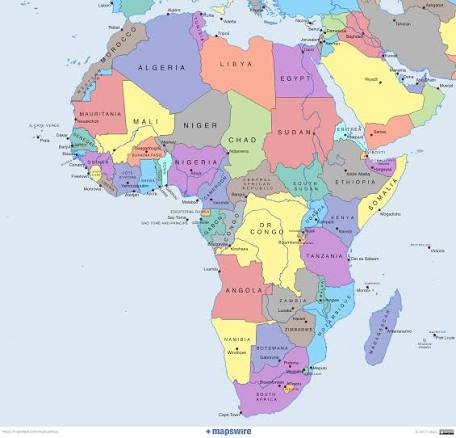
From West Africa to the Horn, recent years have revealed a continent in transition. Military coups in Mali, Burkina Faso, Niger, and Guinea have challenged traditional democratic pathways. At the same time, elections in countries like Senegal and South Africa test civilian governance. Elections in Ghana and Nigeria further challenge its resilience. These developments reflect not a single narrative but a complex struggle over legitimacy, sovereignty, and performance.
African Youths and their major challenges on the continent
One of Africa’s most significant forces is its youth population. With over 60 percent of Africans under the age of 25, the continent holds the world’s youngest population. This demographic reality presents both opportunity and risk. Young people are increasingly educated, digitally connected, and politically aware, yet unemployment and underemployment remain widespread. When aspirations collide with limited opportunity, frustration grows.
Economic, security and other challenges of Africa
Economic pressure is another defining factor. Many African economies are recovering unevenly from global shocks caused by pandemics, wars, and inflation. Countries like Kenya, Egypt, Ghana, and Zambia have struggled with debt sustainability, currency volatility, and rising living costs. For ordinary citizens, macroeconomic indicators matter less than food prices, fuel costs, and job availability.
Security concerns further complicate Africa’s trajectory. Armed groups continue to destabilize the Sahel and the Lake Chad Basin. They also target eastern Democratic Republic of Congo, Somalia, and Sudan. Ongoing conflict in Sudan has produced one of the world’s worst humanitarian crises. The crisis has regional implications for Chad, South Sudan, and the Red Sea corridor. Instability in one country increasingly spills into neighbors.
Global competition for Africa amidst her challenges
Amidst the challenges of Mother Africa, She has become a central arena for global competition. The United States, China, Russia, and the European Union are deepening their engagement. Emerging powers are also increasing their involvement. They achieve this through trade, military cooperation, infrastructure investment, and diplomatic influence. While foreign partnerships can accelerate development, they also raise questions about dependency, strategic autonomy, and long-term benefits.
China remains a dominant economic partner, particularly in infrastructure and resource development. The United States and European nations emphasize governance, security cooperation, and private investment. Russia has expanded influence in parts of Africa through security arrangements and political alliances. Navigating these competing interests requires strong institutions and clear national priorities—something not all African states currently possess.
Climate related impacts, Africa’s potential for greatness and leadership role
Climate change adds another layer of complexity. Droughts in the Horn of Africa, floods in southern Africa, and desertification in the Sahel threaten food security and livelihoods. Climate-related displacement is already increasing, intensifying urban pressure and cross-border migration. Environmental stress, when combined with weak governance, can accelerate conflict.
Despite these challenges, Africa’s story is not one of crisis alone. Innovation is flourishing in technology hubs across Nigeria, Kenya, Rwanda, and South Africa. Regional trade through the African Continental Free Trade Area (AfCFTA) holds long-term promise for economic integration. Cultural influence—from music to fashion and film—continues to reshape Africa’s global image.
ALSO READ:
Leadership will determine whether Africa’s defining decade becomes a breakthrough or a missed opportunity. Citizens are increasingly less tolerant of corruption, inefficiency, and exclusion. Elections are no longer just formalities; they are moments of accountability. Where institutions respond with reform and inclusion, stability improves. Where they resist change, unrest grows.
The next few years will be critical. Countries that invest in education, job creation, and institutional credibility are more likely to harness their demographic advantage. Those that rely on repression or short-term solutions risk deeper instability. Africa’s future will be shaped less by external actors and more by internal choices.
Conclusion
As the continent moves forward, one truth is clear: Africa is no longer a passive participant in global affairs. It is a contested space, a source of innovation, and a region whose decisions will increasingly influence global outcomes. The defining decade has begun, and its direction is still being written.
Intellectual Property & Content Protection Notice
Intellectual Property & Content Protection Notice
© 2026 TrackingTimes.co All rights reserved.
This publication, including its text, structure, analysis, headlines, and original reporting, is protected under applicable international copyright laws.
No portion of this article may be copied, reproduced, modified, republished, distributed, scraped, translated, or stored in any retrieval system without the express written consent of TrackingTimes.co.
Content scraping, AI training usage, unauthorized reposting, or monetized reproduction is strictly prohibited and may attract civil and criminal penalties.
For syndication or licensing requests, contact: trackingtimes@gmail.com