
Biafra
The Hidden Power Dynamics Behind Nnamdi Kanu Sokoto Prison Transfer
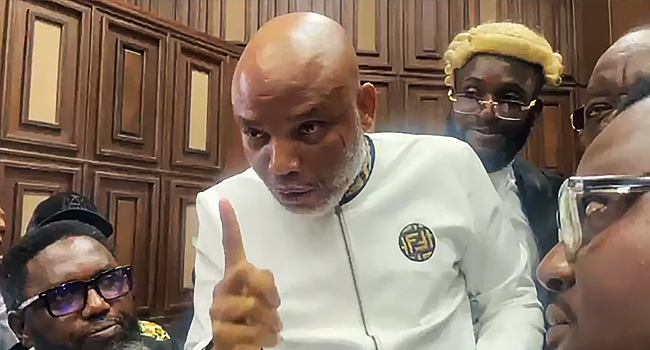
Nnamdi Kanu’s Sokoto prison transfer sends a message of continued geopolitical leverage. It grants the Caliphate bloc the ability to say, “We now hold the biggest separatist threat.” Thus, the transfer aligns with ongoing inter-regional power negotiations ahead of the 2027 and 2031 elections.

What It Signals for Nigeria’s Future Stability
EDITORIAL
The Geopolitical and Intelligence Implications of Nnamdi Kanu’Sokoto Imprisonment: A New Phase in Nigeria’s Power Struggle
The news broke that Mazi Nnamdi Kanu—recently sentenced to life imprisonment—had been moved to the Sokoto Max Security Facility. The reactions across Nigeria were swift. They were emotional and polarized. Beneath the emotional waves, there is a deeper, more complex web of geopolitical strategy. It involves intelligence calculations and historical symbolism. This deserves clearer examination.
This editorial explores an angle rarely addressed: Kanu’s transfer intersects with the internal power politics of Nigeria. It affects the strategic interests of the Sokoto Caliphate bloc. Additionally, there are growing tensions that threaten federal cohesion.
1. Sokoto Was Not Chosen by Accident: The Historical Power Dynamics
Sokoto is not merely a prison location—it is the ancestral seat of the Caliphate, a center that has historically influenced:
- Northern political consolidation
- High-level military alignments
- Religious authority across West Africa
- Silent power negotiations within Nigeria’s elite
Sending Kanu there symbolically communicates authority, dominance, and territorial control.
Why Sokoto matters geopolitically:
- It remains the most politically insulated territory in the North-West.
- It is viewed as a stronghold resistant to Southern or Western pressures.
- Its institutions are historically aligned with preserving the Caliphate’s influence in national politics.
Thus, Kanu’s relocation is not just administrative—it is psychological, symbolic, and strategic.
2. Intelligence Perspective: Why the DSS and Military Would Support a Sokoto Transfer
Security sources (past case studies, not classified information) show that high-risk political detainees are usually kept:
- Close to the capital
- Within high-surveillance zones
- Near federal oversight
Yet Kanu was moved farther, into a region with:
- Limited NGO access
- Higher ethno-religious polarity
- A populace historically critical of Igbo separatist ideology
Intelligence motivations may include:
- Isolation: disrupting communication channels with IPOB networks.
- Territorial dominance: sending a message that no region is beyond federal reach.
- Psychological pressure: keeping him in an unfamiliar, ideologically opposing territory.
- Reduced visibility: far from international observers concentrated in Abuja, Lagos, and Enugu.
This reflects a shift in security doctrine—from managing agitation to using geographical displacement as containment.
3. The Northern Political Elite: How This Decision Strengthens Their Position
The Sokoto Caliphate’s political bloc has historically advocated:
- A united Nigeria under central authority
- Control of key security agencies
- Containment of separatist threats
- Protection of Northern political continuity
Placing Kanu in their territorial domain symbolically hands the North the responsibility—and power—of his containment.
This:
- Reinforces their historical authority
- Balances Tinubu’s southern presidency with Northern influence
- Sends a message of continued geopolitical leverage
- Grants the Caliphate bloc the ability to say, “We now hold the biggest separatist threat.”
Thus, the transfer aligns with ongoing inter-regional power negotiations ahead of the 2027 and 2031 elections.
Watch a viral epic lecture and prophetic session on YouTube via the link below:
EPIC LECTURE AND PROPHETIC SESSION ON NNAMDI KANU IN SOKOTO PRISON, AND BIAFRA FREEDOM
4. Igbo Psychological Reaction: A Calculated Pressure Point?
The Igbo nation views Sokoto as:
- A cultural opposite
- A historic rival region
- The symbolic headquarters of the structure they believe marginalizes them
- The political base that opposed restructuring and secession dialogues
Thus, the transfer could be designed to provoke internal emotional pressure, weaken morale, and disorient the separatist movement.
Yet, ironically, the outcome has been the opposite:
- More mobilization
- More unity among Igbo elites
- More global attention
- More spiritual intervention movements
This miscalculation may worsen regional tensions if not handled carefully.
ALSO READ:
5. International Observers: What Britain, the U.S., and EU Might Be Seeing
Western diplomats quietly track three things:
A. Ethnic fracture lines
Kanu’s imprisonment has reopened unresolved debates about:
- Resource control
- Nigeria’s structure
- Minority rights
- Self-determination
B. Declining trust in federal institutions
Many observers feel the case reflects:
- Procedural irregularities
- Executive influence
- Regional bias
C. Potential destabilization indicators
A life sentence for a separatist figure is usually a red flag for future unrest in multi-ethnic states.
If mishandled, it could undermine Nigeria’s position as West Africa’s stabilizing force.
6. Legal Pathways and the Possibility of Reversal: The Part Not Being Discussed
Despite the weight of the sentence, several non-litigation factors could reverse it:
- Diplomatic pressure
- Political negotiations closer to election cycles
- Elite bargaining between Southern governors and Northern kingmakers
- Use of release as a political trade-off
Nigeria’s history shows that high-profile detentions often resolve through political channels—not legal ones.
Kanu’s case may follow this pattern.
7. What This Means for Nigeria’s Future
This development signals a dangerous but predictable future:
- More regional power contests
- Rising ethnic nationalism
- Institutional distrust
- Increased spiritual mobilization
- Intensified scrutiny from global observers
At the same time, it opens a window for:
- Dialogue
- Restructuring debates
- Elite negotiation
- National reconciliation
Nigeria is entering a reconfiguration phase, and Kanu’s Sokoto imprisonment may be a catalyst for deeper national conversations long overdue.